

Selecting the correct industrial fan type is a critical engineering decision that dictates the efficiency, longevity, and safety of a facility’s ventilation system. It is not merely about moving air; it is about managing fluid dynamics against specific system resistances. Whether the goal is heat dissipation in electronics or moving particulate-laden air in a chemical plant, the choice between axial, centrifugal, and mixed flow designs depends on the relationship between flow rate and static pressure.
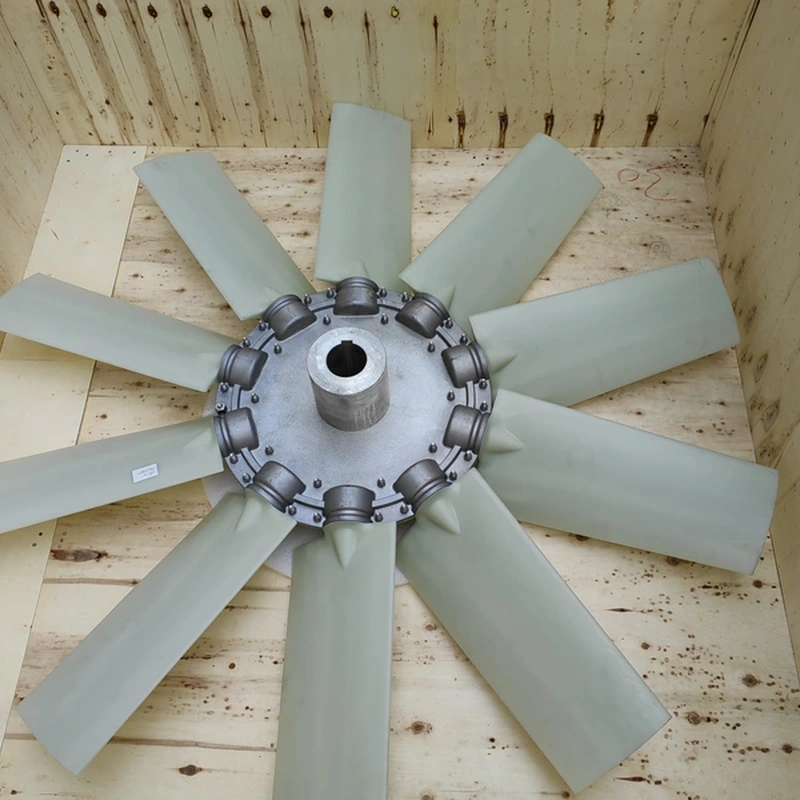
The Engineering Logic of Industrial Air Movement
At its core, industrial air movement is governed by the fan laws and the specific requirements of the environment. Engineers categorize fans based on how the air enters and exits the impeller. This path determines the fan’s ability to overcome “static pressure”—the resistance offered by ducts, filters, and dampers.
For instance, an open-concept warehouse requires high-volume displacement with minimal resistance, whereas a filtration system requires high pressure to “push” air through dense media. Understanding these mechanical archetypes is the first step in optimizing energy consumption and operational uptime.
Axial Fans: High Volume, Low Pressure Solutions
Axial fans are the workhorses of high-volume air displacement. In an axial configuration, air moves parallel to the shaft around which the blades rotate. This design is analogous to an airplane propeller, where the blade pitch creates a pressure difference that moves air linearly.
Technical Characteristics:
- Airflow Pattern: Straight-through flow (inlet and outlet are on the same axis).
- Pressure Profile: Low to medium static pressure.
- Primary Benefit: Maximum airflow (CFM) with a relatively compact footprint.
In practical industrial applications, axial fans—such as those developed by Colorfan—are preferred for cooling and general ventilation. Because these fans typically feature adjustable pitch blades and high-strength impellers, they can be fine-tuned to specific duty points.
Common Industrial Use Cases:
- Heat Dissipation: Cooling of large machinery, transformers, and electronic enclosures.
- General Ventilation: Air circulation in warehouses or workshops where ductwork is minimal.
- Exhaust Systems: Removing non-corrosive fumes or steam from a localized area.
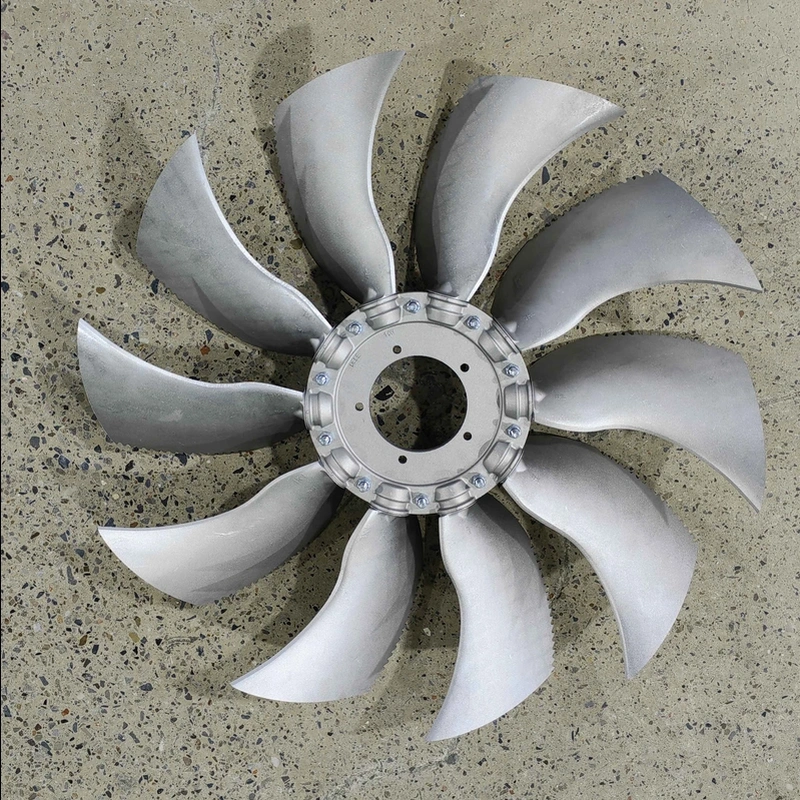
Centrifugal Fans: Overcoming High System Resistance
Often referred to as “blowers,” centrifugal fans operate on a completely different mechanical principle. Air enters the fan inlet axially but is turned 90 degrees and accelerated radially via centrifugal force before being discharged.
This design is exceptionally robust at generating high static pressure. If your system involves long duct runs, complex bends, or heavy filtration, a centrifugal fan is often the only viable solution.
Internal Blade Configurations:
- Forward Curved: Best for clean air applications at low speeds.
- Backward Inclined/Aerofoil: High efficiency and quieter operation, ideal for large-scale HVAC.
- Radial Blades: The “heavy-duty” choice. These are self-cleaning and used for moving air containing dust, wood chips, or metal shavings.
Why Engineers Choose Centrifugal Fans:
In environments where the air is “heavy” (containing moisture or particulates) or where the air must travel through a restrictive exhaust stack, the kinetic energy added by the centrifugal rotation ensures the air does not stall.
Mixed Flow Fans: The Hybrid Performance Bridge
Mixed flow fans represent an evolutionary bridge between axial and centrifugal designs. The air enters axially, but the impeller shape and housing geometry accelerate the air through a conical path.
This hybrid approach allows the fan to achieve higher static pressure than a standard axial fan while maintaining a higher flow rate than a centrifugal fan of the same size.
Performance Trade-offs:
- Efficiency: They often operate with a higher efficiency curve in medium-pressure applications.
- Acoustics: Mixed flow fans are frequently quieter than axial fans when operating at similar pressure levels.
- Space Savings: They allow for “in-line” installation like an axial fan, eliminating the need for the bulky 90-degree turns required by centrifugal blowers.
Comparative Performance Matrix
| Feature | Axial Fans | Centrifugal Fans | Mixed Flow Fans |
| Airflow Direction | Parallel to shaft | 90-degree discharge | Conical/Diagonal |
| Flow Volume | Very High | Low to Medium | Medium to High |
| Static Pressure | Low | Very High | Medium |
| Typical Efficiency | Peak at low pressure | Peak at high pressure | Versatile mid-range |
| Main Advantage | Space-efficient cooling | Handles high resistance | Silent, in-line pressure |
Technical Selection Factors: Beyond the Fan Type
Identifying the fan type is only the beginning. Professional system design requires an analysis of several secondary variables:
- System Resistance Curve: Every duct and filter adds resistance. The “operating point” of the fan must intersect the system curve at a high-efficiency zone to prevent “stall” or “surge.”
- Material Integrity: In chemical processing, fans may require 316L Stainless Steel or specialized coatings (like PTFE) to resist corrosion.
- Spark Resistance: For environments containing volatile organic compounds (VOCs) or explosive dust, AMCA-rated spark-resistant construction (Type A, B, or C) is mandatory.
- Drive Type: Direct-drive fans (where the impeller is on the motor shaft) offer lower maintenance, while belt-drive fans allow for easy speed adjustments to meet changing system demands.
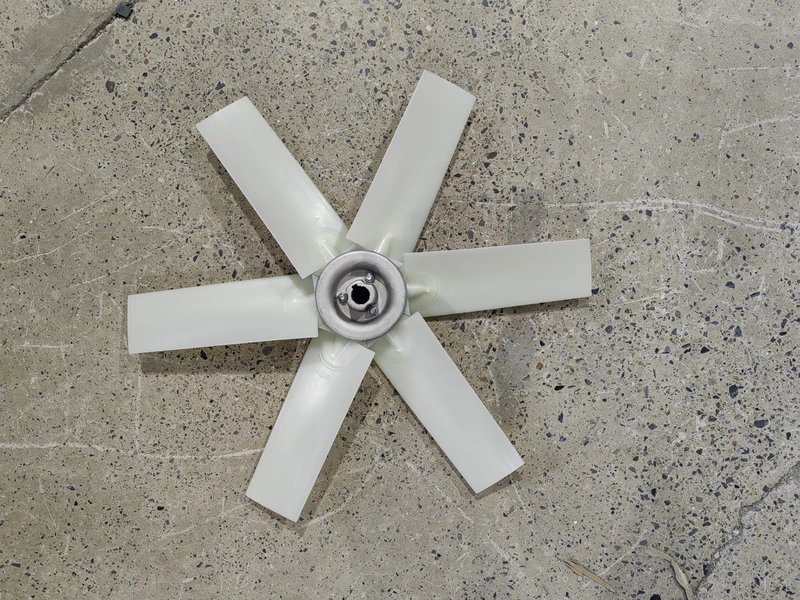
Summary of Application Logic
For engineers and project managers, the selection logic usually follows this path:
- Is the air clean and moving through a large open space? Choose Axial.
- Does the air need to travel through 50 meters of ductwork or a scrubber? Choose Centrifugal.
- Is there a need for high pressure but the physical layout requires a straight-through pipe installation? Choose Mixed Flow.
By aligning the fan’s mechanical strengths with the facility’s aerodynamic resistance, operators can significantly reduce energy costs—often the largest component of a fan’s total lifecycle cost.
FAQ
Q: What is the difference between static pressure and total pressure in industrial fans?
A: Static pressure is the resistance to flow (measured in inches of water gauge or Pascals), while total pressure is the sum of static pressure and velocity pressure (the energy of the moving air). Centrifugal fans excel at creating static pressure to overcome friction.
Q: Can axial fans be used in ductwork?
A: Yes, but only in short, low-resistance runs. If the ductwork is long or has many bends, the backpressure will cause an axial fan to “hunt” or stall, leading to motor overheating. For ducted systems, tube-axial or vane-axial designs are preferred over simple propeller fans.
Q: Why are backward-inclined centrifugal fans considered “non-overloading”?
A: In backward-inclined designs, the power consumption curve reaches a peak and then drops off as airflow increases. This prevents the motor from burning out if the system resistance is lower than expected, unlike forward-curved fans which continue to draw more power as flow increases.
Q: How does blade pitch affect axial fan performance?
A: Blade pitch determines the “bite” the fan takes out of the air. A higher pitch increases airflow and pressure but requires more torque (horsepower) from the motor. Many industrial axial fans allow for manual or automatic pitch adjustment to balance performance and energy use.
Reference Sources
- AMCA (Air Movement and Control Association): Publication 201: Fans and Systems.
- ISO 5801:2017: Industrial fans — Performance testing using standardized airways.
- ASHRAE Handbook: HVAC Systems and Equipment – Chapter 21: Fans.
- U.S. Department of Energy (DOE): Improving Fan System Performance – A Sourcebook for Industry.