

Selecting the right cooling or ventilation component is rarely about finding the “most powerful” fan. In industrial design and OEM projects, the choice between an axial fan and a centrifugal fan is a fundamental engineering decision based on system impedance, space constraints, and fluid dynamics.
While both move air, they do so through entirely different mechanical principles. Choosing the wrong type often leads to premature motor failure, excessive noise, or insufficient thermal management. This guide breaks down the technical nuances to help project managers and engineers specify the correct unit for their application.
The Physics of Airflow: Axial vs. Centrifugal
The primary distinction between these two designs lies in the direction of the airflow relative to the fan’s axis.
Axial Fans
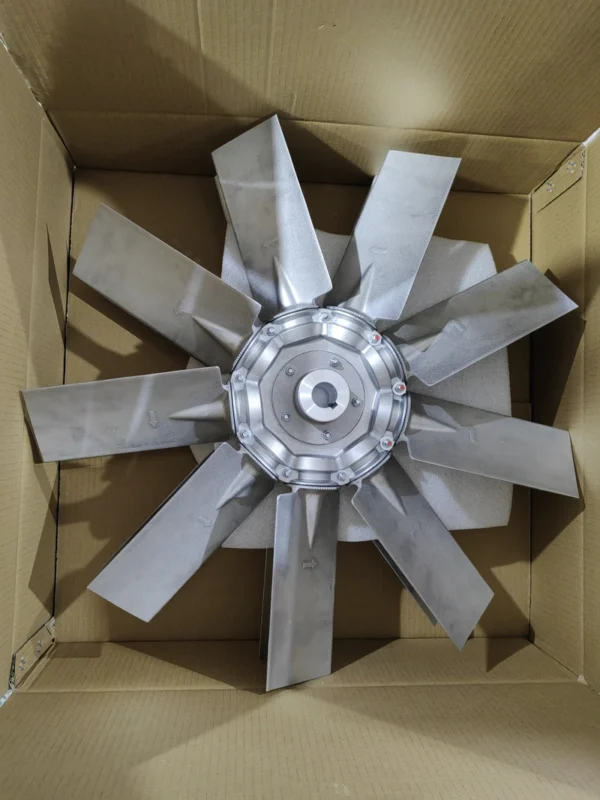
An axial fan draws air in and exhausts it in the same parallel direction as the shaft. The blades act like an airplane wing, creating a pressure difference that pulls air through. They are designed for “high-volume, low-pressure” scenarios. If your goal is to move a massive amount of air from one open space to another, axial is usually the baseline.
Centrifugal Fans (Blowers)
Often called blowers, centrifugal fans move air at a 90-degree angle to the intake. Air enters the center of the fan, is pulled into the “impeller” blades, and is flung outward via centrifugal force. This design excels at creating high static pressure. If the air must travel through ducts, filters, or narrow heatsinks, the centrifugal fan provides the “push” necessary to overcome that resistance.
Technical Performance Comparison
When evaluating these for an OEM project, engineers look at the performance curve (P-Q curve). Below is a summary of how they compare in real-world operating conditions:
| Feature | Axial Fan | Centrifugal Fan |
| Airflow Direction | Parallel to the axis (Straight through) | Radial (90-degree turn) |
| Static Pressure | Low to Moderate | High |
| Airflow Volume | High (High CFM) | Moderate |
| Noise Level | Generally higher at high RPM | Quieter for the same pressure |
| Typical Efficiency | Peak efficiency at low pressure | Peak efficiency at high pressure |
| System Resistance | Struggles with restricted airflow | Handles filters and long ducts well |
When to Specify an Axial Fan
Axial fans are the workhorses of the electronics and general ventilation industries. They are preferred when the system has low “backpressure.”
- Enclosure Cooling: For server racks or control cabinets where air moves freely across components, an axial fan provides the most efficient CFM (Cubic Feet per Minute) per watt.
- Condenser Cooling: In HVAC systems, axial fans are used to move air across large outdoor coils.
- Space-Constrained Depth: Because the airflow is straight, axial fans often have a thinner profile, making them ideal for slim equipment.
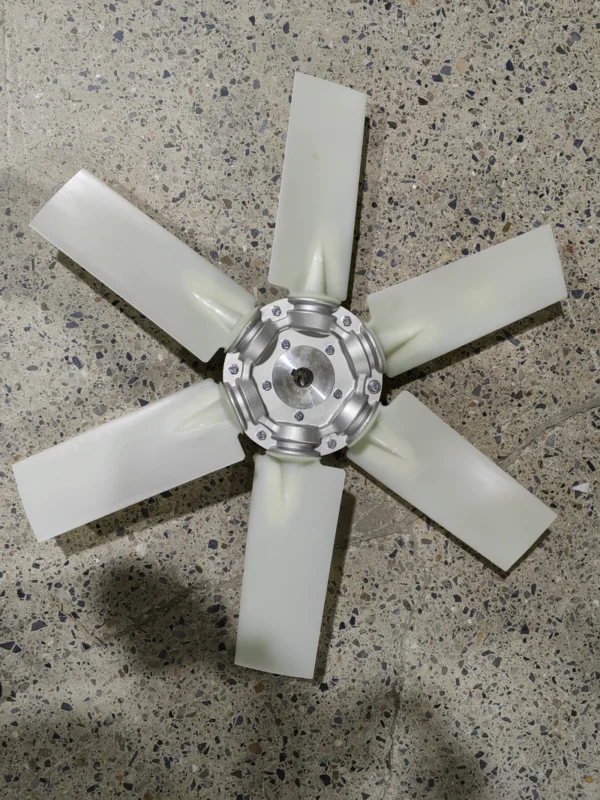
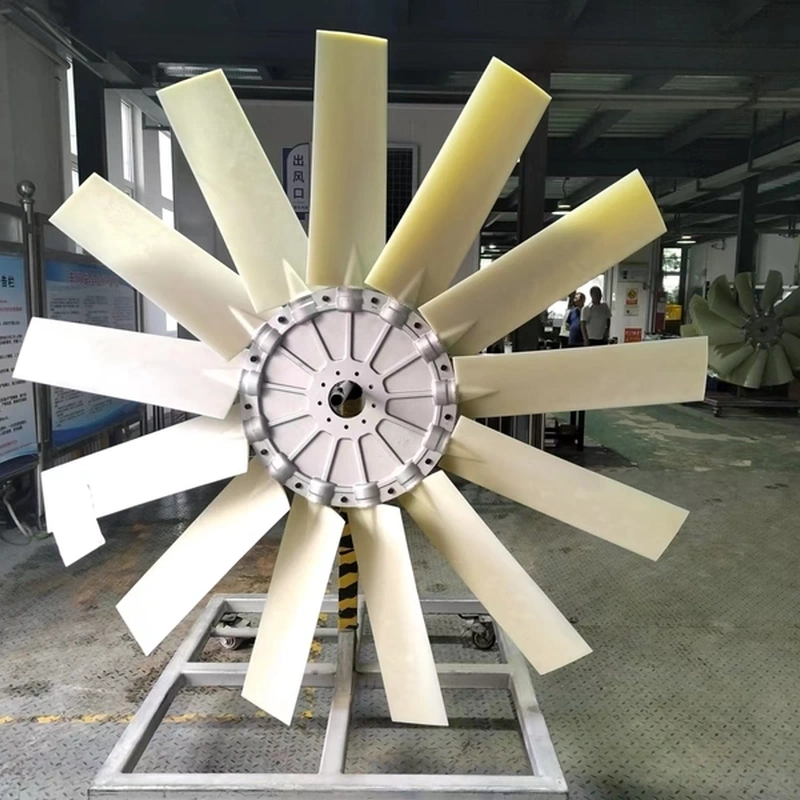
In manufacturing, especially for specialized equipment, custom axial fan solutions are often engineered with specific blade pitches to optimize noise-to-airflow ratios. For example, in large-scale LED displays or industrial power supplies, an axial fan with PWM (Pulse Width Modulation) control allows for dynamic cooling based on real-time thermal loads.
When to Specify a Centrifugal Fan
If your application involves “pushing” air through a restricted path, an axial fan will likely “stall,” leading to high noise and zero cooling. This is where centrifugal fans become necessary.
- Air Filtration Systems: High-efficiency particulate air (HEPA) filters create significant resistance. Centrifugal blowers are required to force air through the dense filter media.
- Ducting and Venting: If the exhaust point is several meters away from the heat source, the pressure drop in the ducting requires the high static pressure of a centrifugal design.
- Industrial Drying and Curing: Applications requiring a concentrated “jet” of air for drying parts or cooling localized hotspots benefit from the focused discharge of a blower.
Critical Engineering Considerations: Beyond the Basics
1. System Impedance and the “Stall” Region
Every system has a resistance curve. If you place a high-airflow axial fan in a system with high resistance (like a clogged filter), the fan enters a “stall” or “surge” region. This not only drops the airflow significantly but causes air turbulence that results in a high-pitched whine and increased vibration, which can lead to bearing failure.
2. Bearing Selection and Longevity (L10 Life)
In industrial environments, the fan is often the first component to fail.
- Sleeve Bearings: Cost-effective for horizontal mounting and consumer-grade products.
- Ball Bearings: Essential for industrial OEM projects. They allow for mounting in any orientation and typically offer an L10 life of 70,000+ hours at 40°C.
- Fluid Dynamic Bearings (FDB): Used when ultra-low noise is a primary requirement.
3. Environmental Protection (IP Ratings)
Manufacturing environments aren’t clean labs. If the fan is exposed to dust, moisture, or oil mist, specify an IP55 or IP68 rating. Industrial axial fans used in outdoor telecommunications or food processing often require specialized coatings on the motor windings to prevent corrosion.
Cost vs. Value in OEM Procurement
From a procurement perspective, axial fans generally have a lower initial unit cost and are easier to integrate into standard mounting holes. However, a centrifugal fan may offer a lower “Total Cost of Ownership” in high-pressure systems because it operates closer to its peak efficiency point, reducing energy consumption over thousands of operating hours.
When sourcing, it is vital to evaluate the manufacturer’s testing capabilities. Reliable suppliers should provide verified P-Q curves, noise data (dBA/Lp), and certifications such as CE, UL, or RoHS compliance.
Conclusion: Making the Final Choice
To decide between an axial and centrifugal fan, start with the System Resistance.
- If the air moves in a straight line with little obstruction: Choose Axial.
- If the air needs to turn corners, pass through filters, or travel through narrow channels: Choose Centrifugal.
For project managers developing custom industrial hardware, consulting with a manufacturer like Colorfan during the prototyping stage can prevent costly redesigns. Proper fan selection ensures that your equipment operates within its thermal limits, maintaining the reliability your end-users expect.
FAQ
Q: Can I use an axial fan for a long ducting system?
A: Generally, no. Axial fans cannot generate enough static pressure to overcome the friction of long ducts. You will experience a massive drop in airflow. A centrifugal blower is the correct choice for ducted ventilation.
Q: Why is my axial fan so loud when I put a cover over it?
A: This is likely due to “system effect.” When the intake or exhaust is restricted, the fan works against high backpressure, causing turbulence. This increases the noise and reduces the fan’s lifespan.
Q: Are centrifugal fans more expensive than axial fans?
A: Usually, yes. Centrifugal fans have a more complex housing (scroll) and impeller design. However, they are more efficient at moving air against resistance, which can save money on energy and replacement costs in the long run.
Q: What is the benefit of a DC fan over an AC fan for these types?
A: DC fans (especially EC – Electronically Commutated) are more energy-efficient, produce less heat, and allow for precise speed control (PWM), which is essential for modern “smart” industrial equipment.
Reference Sources
- AMCA (Air Movement and Control Association): Standards for fan performance testing (AMCA 210).
- IEEE Xplore: Research on thermal management in electronic packaging and fan efficiency.
- ISO 13347: Industrial fans — Determination of fan sound power levels under standardized theoretical conditions.
- Colorfan Technical Documentation: Industrial axial fan specifications and performance curves.