

The movement of air is a fundamental requirement in modern thermodynamics, whether for cooling high-density server racks or ventilating industrial workshops. At the heart of these systems is the axial fan. Unlike other types of air movers, the axial fan is defined by its simplicity and efficiency in moving high volumes of air at relatively low pressures.
To understand the axial fan working principle, one must look beyond the spinning blades and into the physics of aerodynamics and electromechanical energy conversion.
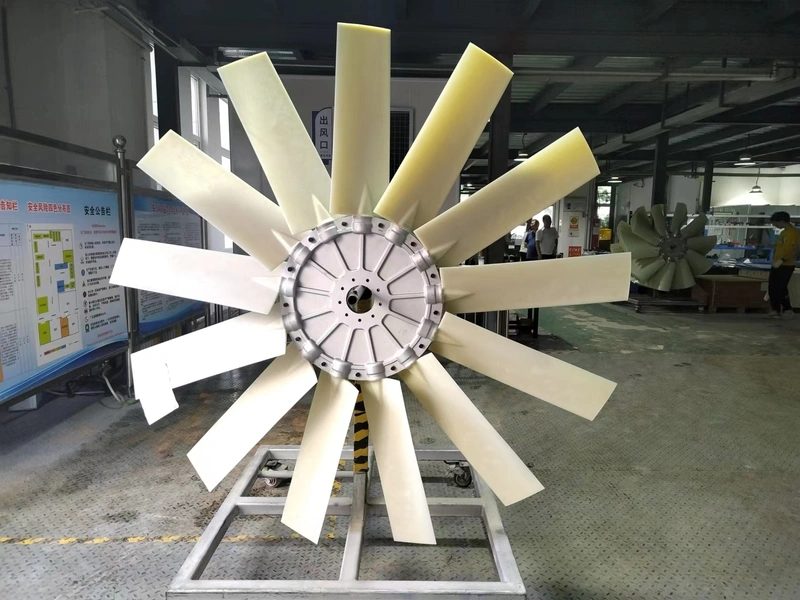
What is an Axial Flow Fan?
An axial fan is a type of industrial fan where the airflow passes through the fan in a direction parallel to the shaft or axis around which the blades rotate. This “straight-through” flow is the defining characteristic that distinguishes it from centrifugal (radial) fans.
In the industrial sector, axial fans are the preferred choice for applications requiring a high Flow Rate (measured in Cubic Feet per Minute or CFM) but facing low system resistance (Static Pressure). Manufacturers, such as those producing the specialized units found in Colorfan’s axial fan range, engineer these components to balance noise, power consumption, and thermal management.
The Aerodynamic Logic: How “Lift” Creates Airflow
The axial fan working principle is remarkably similar to the wing of an airplane. The fan blades act as rotating airfoils. As the motor spins the impeller, air enters the leading edge of the blades.
- Pressure Differential: The profile of the blade (the airfoil shape) causes the air velocity to differ between the top and bottom surfaces. According to Bernoulli’s Principle, this velocity change creates a pressure difference.
- Lift Generation: The lower pressure on one side of the blade “pulls” air forward, while the higher pressure on the other side “pushes” it.
- Axial Discharge: Because the blades are set at a specific pitch (angle), the resulting force moves the air mass along the axis of the fan shaft.
While the air is pushed forward, it also gains a certain amount of swirl or “vortex” motion due to the rotation of the impeller. In high-performance industrial axial fans, stationary guide vanes are often used to straighten this swirling air, converting the kinetic energy of the swirl into useful static pressure.
Critical Components of an Axial Fan System
To appreciate the working principle, one must understand the three core components that dictate performance:
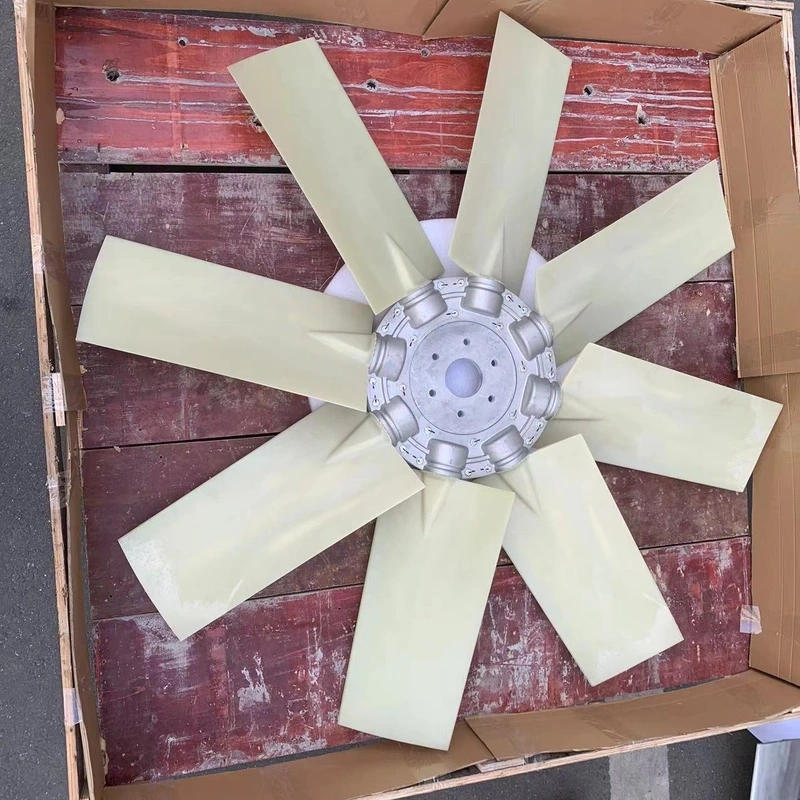
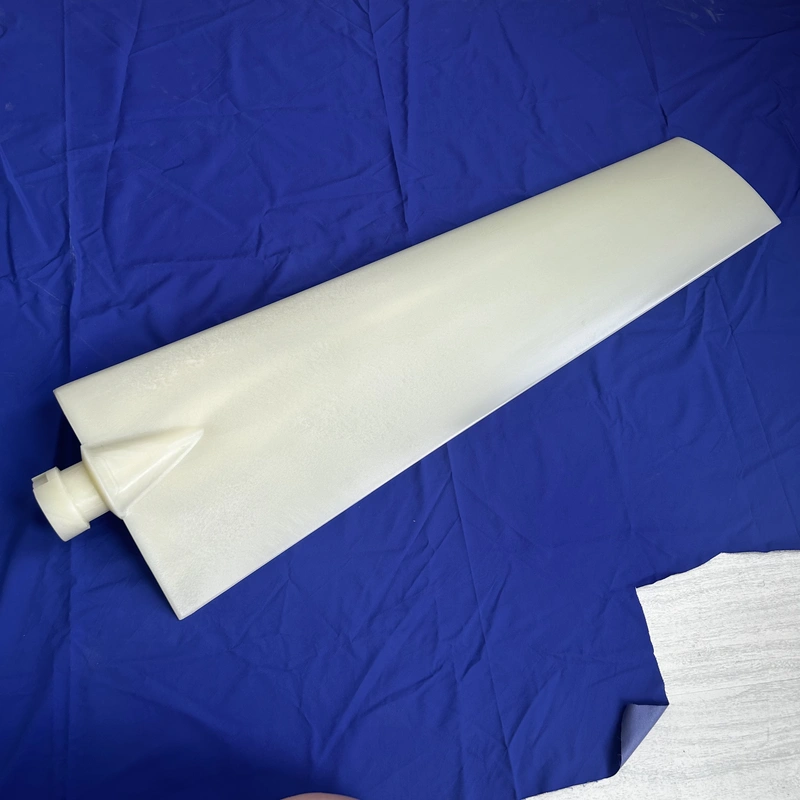
1. The Impeller and Blade Geometry
The number of blades, their pitch angle, and their aerodynamic profile determine the fan’s “Performance Curve.”
- Variable Pitch: Some industrial fans allow for pitch adjustment to fine-tune airflow for specific environmental needs.
- Material Choice: Blades can be made from plastic (for lightweight, low-cost cooling), aluminum, or specialized composites for high-temperature resistance.
2. The Drive Motor (AC vs. DC vs. EC)
The motor is the prime mover.
- AC Motors: Traditional, reliable, and connected directly to the power grid.
- DC Motors: Offer better speed control and are common in electronics cooling.
- EC (Electronically Commutated) Motors: These represent the current peak of efficiency, combining the best of AC and DC technology to reduce energy consumption by up to 70% in some industrial applications.
3. The Fan Housing (Shroud)
The housing is not just a safety guard; it is a critical aerodynamic component. A tight clearance between the blade tips and the housing prevents “tip leakage,” where air recirculates back over the blade tips, significantly reducing efficiency and increasing noise.
Step-by-Step: The Operational Workflow
- Power Input: Electrical energy is supplied to the motor stator.
- Electromagnetic Torque: The interaction between the stator’s magnetic field and the rotor (connected to the impeller) generates torque, initiating rotation.
- Induction of Flow: As the impeller reaches its rated RPM (Revolutions Per Minute), the blades begin to slice through the ambient air.
- Kinetic Transfer: The mechanical energy of the rotating blades is transferred to the air molecules, increasing their kinetic energy.
- Directional Displacement: The angle of attack of the blades forces the air to move linearly along the shaft, creating a continuous stream of cooling or exhaust air.
Comparison: Axial vs. Centrifugal Fans
For engineers and procurement managers, choosing the right “working principle” is vital for system longevity.
| Feature | Axial Fan | Centrifugal Fan |
| Airflow Direction | Parallel to the shaft (Straight) | 90-degree turn (Radial) |
| Air Volume | High | Low to Medium |
| Pressure Capability | Low | High |
| Typical Use Case | General ventilation, PC cooling, Radiators | Dust collection, HVAC ducting, Dryers |
| Space Efficiency | Compact, slim profile | Bulkier due to scroll housing |
Performance Variables in Real-World Environments
The theoretical axial fan working principle must account for “System Effect” in real-world installations. In a laboratory, a fan’s performance is measured in a zero-obstruction environment. However, in a server chassis or an industrial ventilation duct:
- Backpressure (Static Pressure): If the air path is restricted by filters or dense heat sinks, the axial fan must work harder. If the pressure is too high, the fan may reach a “stall” point, where airflow drops off sharply and noise increases.
- Air Density: Fans move a constant volume of air, but the mass of that air changes with altitude and temperature. High-temperature environments (like industrial kilns) require fans designed for lower-density air.
- Turbulence: Inflow turbulence (caused by placing the fan too close to a wall or obstruction) can disrupt the airfoil logic, leading to vibration and reduced lifespan.
Applications of the Axial Flow Principle
Axial fans are ubiquitous because of their versatility. You will find them in:
- Data Centers: High-speed DC axial fans are used to pull cold air through server racks to prevent CPU throttling.
- Industrial Condensers: Large-diameter axial fans move air over heat exchanger coils in refrigeration systems.
- Automotive: Radiator fans utilize the axial principle to cool engine coolant when the vehicle is stationary.
- Aerospace: Small, high-precision axial fans manage the thermal loads of avionics suites.
Selecting the Right Axial Fan
When evaluating a fan for a project, look beyond the basic RPM. Professionals analyze the P-Q Curve (Pressure-Flow curve) to ensure the fan operates in its “efficiency window.” For instance, Colorfan’s technical specifications provide detailed data on how their fans perform under varying resistance levels, allowing engineers to match the motor type (AC, DC, or EC) to the specific duty cycle of the machine.
FAQ: Common Questions About Axial Fan Mechanics
1. Why is an axial fan called “axial”?
It is named “axial” because the air moves along the axis of the rotation of the blades. The intake and exhaust are in the same straight line.
2. Can an axial fan be used for high-pressure applications?
Generally, no. Axial fans are optimized for high volume, not high pressure. If you need to push air through long, narrow ductwork, a centrifugal fan or a multistage axial fan (vane-axial) is usually required.
3. What causes axial fan noise?
Noise is primarily caused by two factors: “vortex shedding” at the tips of the blades and mechanical vibration from the motor or bearings. High-quality fans use balanced impellers and specialized blade shapes to minimize these effects.
4. How does blade pitch affect the working principle?
A higher pitch (steeper angle) moves more air per revolution but requires a more powerful motor to overcome the increased torque. A lower pitch is quieter and requires less power but moves less air.
5. What is the difference between a tube axial fan and a vane axial fan?
A tube axial fan is simply an axial fan inside a cylinder. A vane axial fan adds stationary “guide vanes” behind the impeller to straighten the airflow, which increases pressure and efficiency.
Reference Sources
- AMCA (Air Movement and Control Association): Fan Efficiency and Performance Standards.
- IEEE Xplore: Analysis of Aerodynamic Performance in Axial Flow Fans for Industrial Cooling.
- ASHRAE Handbook: HVAC Systems and Equipment – Fans and Air-Handling.
- Journal of Turbomachinery: Effect of Blade Geometry on Axial Fan Efficiency.