

In industrial thermal management, the choice of fan housing and blade material is not merely an aesthetic preference; it is a critical engineering decision that affects the lifespan, efficiency, and safety of the entire system. Aluminum axial fans have become the gold standard for environments where plastic alternatives fail due to heat, UV exposure, or mechanical stress.
When evaluating cooling solutions for server racks, industrial welding machines, or power cabinets, engineers prioritize materials that offer high thermal conductivity and structural integrity. An aluminum axial fan typically utilizes a die-cast aluminum alloy frame, providing a robust housing that protects internal components while assisting in heat dissipation.
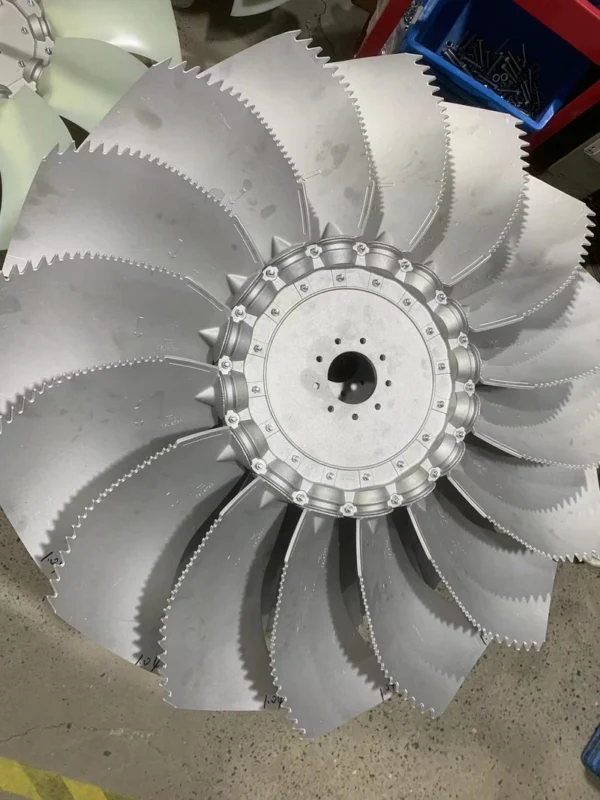
Why Aluminum Alloy Defines High-Performance Axial Fans
The transition from plastic to aluminum in axial fan construction is driven by the physical demands of industrial environments. Unlike thermoplastic PBT, aluminum alloy (often ADC12 or similar grades) offers several distinct mechanical advantages:
- Thermal Dissipation: Aluminum acts as a secondary heat sink. As the motor generates heat during operation, the metal frame conducts that heat away from the bearings, significantly extending the fan’s Mean Time Between Failures (MTBF).
- Structural Rigidity: In high-RPM applications, plastic frames may vibrate or warp. Aluminum maintains its shape, ensuring the gap between the blade tip and the frame remains constant, which preserves airflow efficiency and reduces noise.
- EMI/RFI Shielding: For sensitive electronics, such as medical imaging or telecommunications, aluminum provides a degree of natural electromagnetic interference shielding that plastic cannot match.
- Environmental Resistance: Aluminum is inherently resistant to UV radiation and high ambient temperatures, making these fans suitable for outdoor enclosures and heavy-duty machinery.
Technical Performance Matrix: Aluminum vs. Plastic Fans
When selecting a fan for an OEM project, understanding the trade-offs is essential for long-term ROI.
| Feature | Aluminum Axial Fan | Plastic Axial Fan |
| Operating Temp | -20°C to +80°C (High-temp versions available) | -10°C to +60°C |
| Durability | High; impact and vibration resistant | Moderate; prone to cracking over time |
| Heat Dissipation | Excellent (Active conduction) | Poor (Insulator) |
| Weight | Heavier (Provides stability) | Lightweight |
| Ideal Use Case | Industrial, Outdoor, Telecommunications | Consumer electronics, PC cooling |
Key Specifications for Procurement Evaluation
B2B buyers and project managers must look beyond simple CFM (Cubic Feet per Minute) ratings. To ensure the aluminum axial fan fits the application, the following technical parameters are paramount:
- Bearing System: Industrial-grade fans usually offer dual ball bearings. While sleeve bearings are cheaper, ball bearings are preferred for aluminum fans as they support vertical and horizontal mounting and offer a lifespan exceeding 50,000 hours.
- IP Ratings: For environments with dust or moisture, look for IP55 or IP68-rated aluminum fans. These involve specialized resin encapsulation for the motor.
- Static Pressure (in-H2O): This measures the fan’s ability to push air through resistance, such as filters or densely packed circuit boards. Aluminum fans often feature optimized blade geometries to maximize static pressure.
- Voltage Flexibility: Reliable manufacturers, such as those featured on the Colorfan-Dele Axial Fan range, provide options across 115V, 230V, and 380V AC, as well as 12V/24V/48V DC to match global industrial standards.
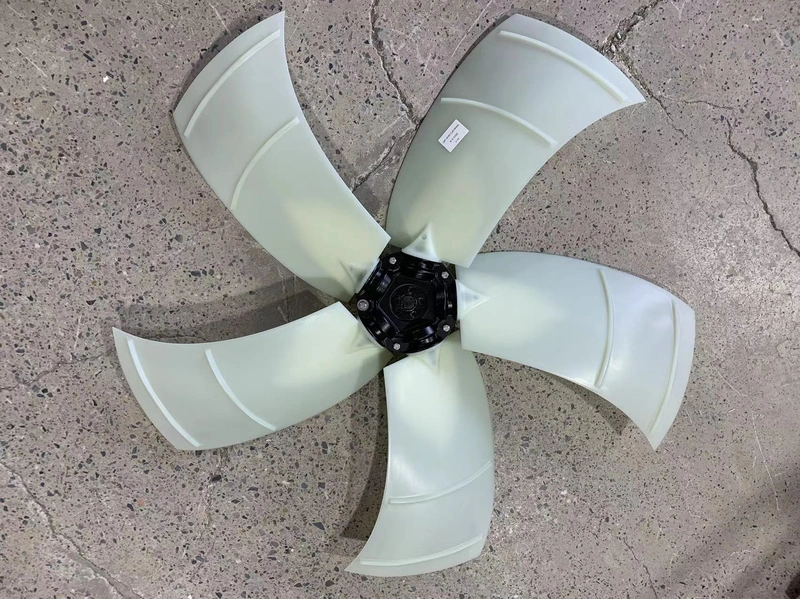
Specialized Applications in Industrial Ecosystems
Aluminum axial fans are not universal “one-size-fits-all” components; they are engineered for specific high-stress scenarios:
1. Power Supply and Inverter Cooling
Inverters and UPS systems generate significant internal heat. The thermal conductivity of an aluminum fan frame prevents “hot spots” within the cabinet, ensuring the capacitors and semiconductors remain within safe operating temperatures.
2. Industrial Welding and CNC Machines
These environments are often characterized by airborne metallic dust and high vibrations. A plastic fan might degrade or shatter under impact, whereas a die-cast aluminum axial fan provides the ruggedness required for 24/7 manufacturing cycles.
3. Commercial Kitchen and Ventilation
Due to their resistance to grease accumulation and ease of cleaning, aluminum fans are frequently integrated into professional exhaust hoods and refrigeration units where plastic might become brittle.
Selection Criteria for OEM and Custom Projects
When sourcing from a manufacturer, consider the “Customization Depth.” High-quality suppliers allow for modifications that go beyond the catalog. Engineers should inquire about:
- Tachometer/Alarm Outputs: Essential for systems requiring real-time monitoring of fan failure.
- PWM Control: For energy-sensitive applications, Pulse Width Modulation allows the system to adjust fan speed based on actual temperature loads.
- Salt Spray Resistance: If the equipment is located near coastal areas, an additional anti-corrosion coating on the aluminum frame is a standard industry requirement (meeting ASTM B117 standards).
For professionals evaluating specific models, the aluminum axial fan selection provides a variety of dimensions and airflow capacities designed to meet the rigorous standards of modern industrial design.
FAQ
Q1: Is an aluminum axial fan always better than a plastic one?
Not necessarily. While aluminum is superior for durability, thermal management, and harsh environments, plastic fans are more cost-effective for lightweight, low-stress consumer electronics where heat is not a primary concern.
Q2: How does the weight of an aluminum fan affect mounting?
Aluminum fans are heavier, which requires more robust mounting points. However, this extra mass helps dampen motor vibrations, often resulting in a more stable and quieter operation in metal enclosures.
Q3: Can aluminum axial fans be used in high-humidity environments?
Yes, provided they have the correct IP (Ingress Protection) rating and the aluminum has been treated with an anti-corrosive finish. Aluminum naturally forms a protective oxide layer, but for marine or chemical environments, further coating is recommended.
Q4: What is the typical lead time for custom industrial aluminum fans?
Standard models are usually in stock, but custom configurations (special connectors, high IP ratings, or specific voltages) typically involve a 3-6 week lead time depending on the production volume and testing requirements.
Q5: How do I calculate the required CFM for my cabinet?
The general formula is:
CFM=3.16×WattsΔT(∘F)CFM=ΔT(∘F)3.16×Watts, where Watts is the heat generated by the equipment and
ΔTΔTis the allowable temperature rise. Engineers usually add a 20-25% safety margin to account for air filters and internal obstructions.
Reference Sources
- ISO 1940-1: Mechanical vibration — Balance quality requirements for rotors in a constant (rigid) state.
- UL 507: Standard for Safety for Electric Fans (Underwriters Laboratories).
- ASTM B117: Standard Practice for Operating Salt Spray (Fog) Apparatus for corrosion resistance testing.
- AMCA (Air Movement and Control Association): Technical guidelines for industrial fan performance and airflow measurement.