

Axial fan bushings are small components that support the rotating shaft inside many axial-flow fans. They influence bearing life, shaft alignment, noise, and maintenance intervals; understanding their role helps you specify the correct part for an industrial fan assembly.
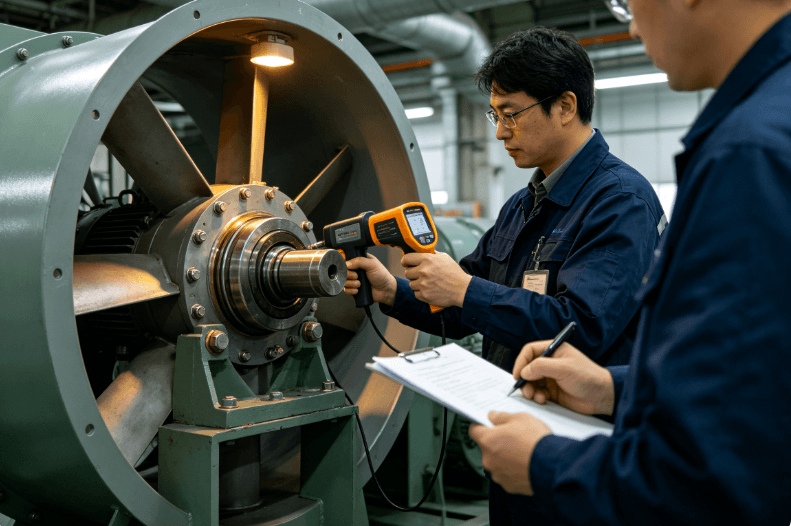
What is an axial fan bushing?
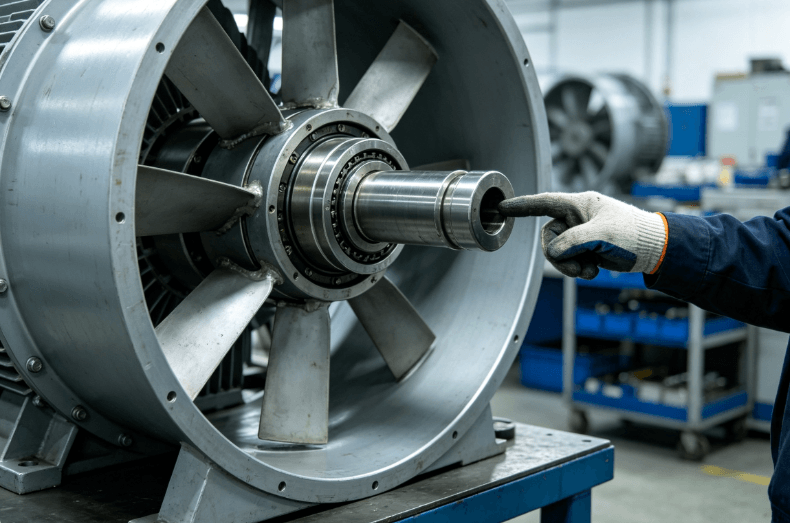
An axial fan bushing (sometimes called a sleeve or plain bearing) is a cylindrical component that supports the rotating shaft inside the hub or motor housing. It reduces metal-to-metal contact between the shaft and housing and can be made from metals (bronze/alloy), sintered materials, polymers, or composite materials. The bushing’s purpose is mechanical support and wear control rather than torque transmission.
How bushings affect fan operation — independent engineering guidance
Bushings affect several operational characteristics of an axial fan:
- Friction and power loss — bushings create resistance to rotation; lower-friction materials or lubricated designs reduce wasted power but may require different maintenance.
- Vibration and rotor stability — clearances, concentricity, and wear patterns influence shaft whirling and vibration; a poorly supported shaft can increase noise and reduce bearing life.
- Maintenance intervals — self-lubricating or sealed bushings can extend service intervals, while plain-metal bushings often need scheduled lubrication or replacement.
- Contaminant sensitivity — porous or soft bushings can trap dust and abrasive particles differently than sealed rolling bearings.
When a ventilation or exhaust system is used as an engineering control for hazardous substances, design and operation must prevent harmful dispersion and maintain sufficient exhaust-air volume and velocity; exhaust fans and appurtenances should be designed and maintained accordingly [1]. These regulatory expectations affect how you select mounting details, bushing retention, and sealing to avoid uncontrolled leakage paths.
Material choices and wear mechanisms
Common bushing materials include bronze and sintered metal, polymer composites, and engineered plastics. Each material class trades off friction, load capacity, and maintenance:
- Bronze or alloy sleeves: good load capacity and often re-lubricable; common in heavier-duty fans.
- Sintered metal (porous bronze): can be impregnated with lubricant for limited maintenance intervals.
- Polymers/composites: lower friction and sometimes self-lubricating; susceptible to thermal limits and certain chemicals.
Fan-system thermodynamic relationships and the desire to operate near a fan’s best efficiency point influence selection considerations: changes in friction or shaft torque affect operating point and power draw according to fan laws and standard guidance for fan systems [2].
Installation, tolerance, and alignment considerations (engineering guidance)
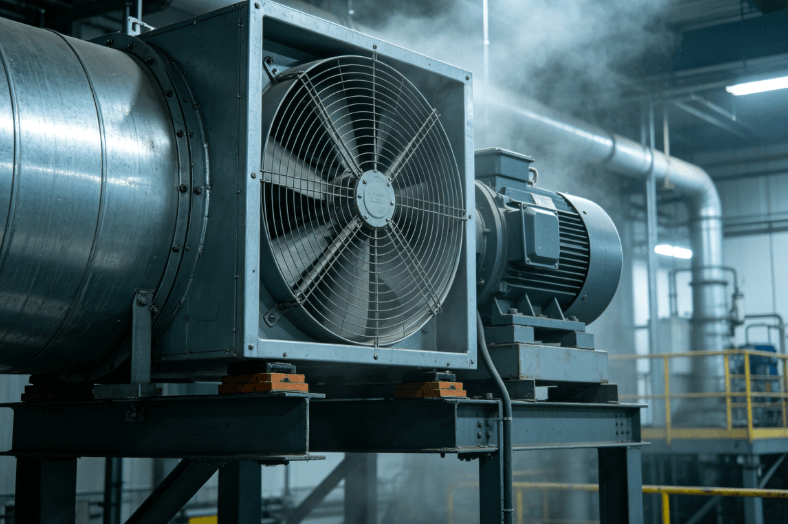
Correct installation is essential for bushing performance. Typical engineering checks before assembly include shaft runout, housing bore concentricity, interference/press-fit or slip-fit tolerances, and lubrication method. Misalignment or excessive clearance increases fretting and noise; over-pressing a bushing can distort the sleeve and change clearance. If you control fan performance, remember that frictional torque from bushings contributes to overall shaft torque and changes the operating point of the fan [2].
Comparison table — common axial fan bushing types
| Type | Typical attributes | Maintenance notes |
|---|---|---|
| Bronze/alloy sleeve | Good load capacity; tolerant of temperature; supports re-lubrication | Periodic greasing recommended if grease ports are used |
| Sintered (oil-impregnated) | Self-lubricating for defined service interval; compact | Replace when porosity/clogging or wear reduces clearance |
| Polymer/composite | Low friction; corrosion resistant; light weight | Check chemical compatibility and temperature limits |
| Flanged/retaining designs | Easier to fit and index; useful for axial positioning | Inspect retaining feature for wear and corrosion |
Supplier-page facts (COLORFAN)
The COLORFAN product site lists axial-fan components and assemblies, including axial fan hubs and axial fan blades and related parts. Product family entries observed on the supplier site include alloy hubs for several axial fan models and multiple medium- and large-size axial fan blade options. The supplier publishes pages about axial fan parts and engineering topics that describe blade, hub, and bushing relationships; however, specific bushing dimensions, materials, or certified performance values are not provided on the public product-summary pages and should be confirmed with the supplier for a particular part or assembly.
See COLORFAN product listings and part guides here: COLORFAN products and the axial fan parts guide: Axial fan parts guide.
RFQ confirmation checklist (what to ask COLORFAN or your supplier)
Use this checklist when requesting a quote or technical drawing. Items marked with an asterisk should be confirmed in writing because they are not consistently specified on high-level product pages.
- Part drawing or 2D/3D model (CAD) *
- Inner diameter (shaft fit) and outer diameter, length, and tolerances *
- Material specification and grade (bronze alloy number, polymer grade) *
- Heat treatment, hardness, or surface finish requirements *
- Lubrication method (re-lubricatable, oil-impregnated, self-lubricating) *
- Maximum recommended shaft speed / RPM and operating temperature range *
- Shaft fit class (e.g., H7/g6) and assembly/press-fit instructions *
- Corrosion protection or coating requirements
- Retention or locking features (snap ring, flange, set-screw) *
- Testing or inspection requirements and acceptance criteria
- Required certifications or compliance statements (if any) *
- Minimum order quantity, unit price, and lead time *
Maintenance best practices (independent guidance)
Periodic inspection is the most reliable method to detect bushing wear. Look for increased shaft end-play, unusual vibration, elevated operating temperature at the bearing, or metal particles in lubrication media. For systems used as part of ventilation controls for hazardous materials, ensure exhaust routing and fan maintenance follow applicable ventilation standards to prevent harmful dispersion and to maintain capture and exhaust performance [1].
FAQ — common questions about axial fan bushings
How do I tell if a bushing is failing?
Typical signs include rising vibration, audible noise, increased shaft runout, metallic debris in lubricant, or rising bearing temperature. Inspection and measurement of clearances against a baseline are recommended.
Can I replace a bushing with a different material?
Yes, but validate shaft hardness, operating temperature, chemical exposure, and load conditions. Different materials alter friction and wear behavior, which can shift fan operating points.
Do bushings need lubrication?
Depend on type: oil-impregnated sintered bushings are often described as self-lubricating for a service interval; bronze sleeves usually require periodic lubrication. Always follow supplier guidance and specify lubricant compatibility.
When should I request a CAD drawing from the supplier?
Request a drawing during the RFQ stage before placing an order or before modifying a fan assembly. A drawing confirms fit, tolerances, and retention features.
Are bushings appropriate for hazardous-area fans?
Bushing selection for hazardous-area equipment should be coordinated with the overall certification strategy; do not assume a particular bushing material or design meets hazardous-area certification without documented evidence from the equipment certifier.
Conclusion and next steps
Axial fan bushings are small but critical for reliable fan operation. For replacement or new designs, gather dimensional drawings, material specs, lubrication method, and speed/temperature limits before placing an order. Use the RFQ checklist above to confirm items not shown on public product pages and consult the supplier directly for part-level details.
To request technical details or a quote, visit the COLORFAN product pages and part guides: COLORFAN products and axial fan parts guide, or include the RFQ checklist when contacting your sales engineer.
References
[1] OSHA — 1926.57 Ventilation (design and operation expectations).
[2] U.S. DOE — Fan System Cheat Sheet (fan laws, best-efficiency guidance).