

Axial fan hubs are the central mechanical components that connect impeller blades to the drive shaft and transmit torque in axial-flow fans. This article summarizes the hub’s primary functions, common structural forms, material options as described by suppliers, and practical engineering points to check when specifying or replacing a hub.
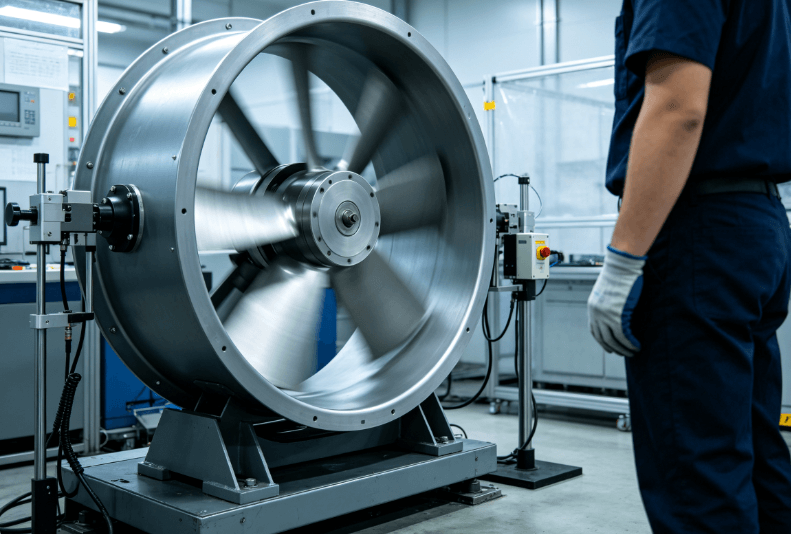
What an axial fan hub does
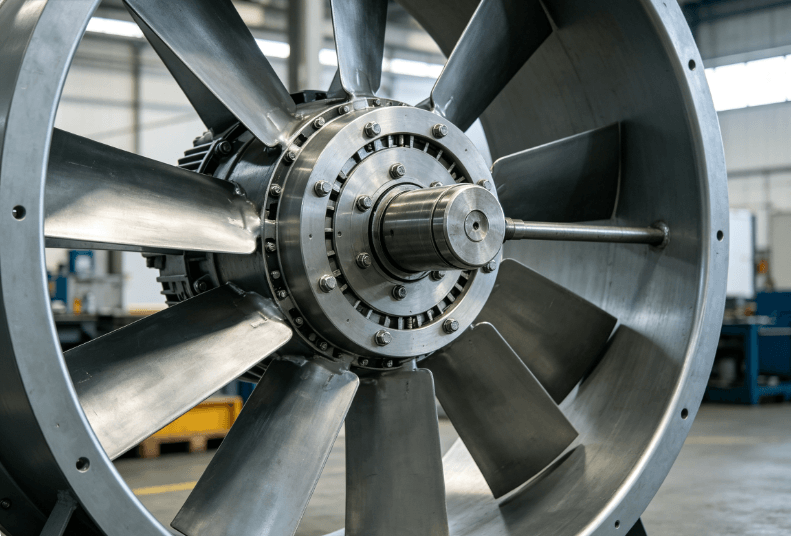
An axial fan hub performs three basic roles: it secures the blades at the correct pitch and spacing, centers and locks the impeller on the driven shaft, and transfers rotational torque from the shaft to the blade set. Hubs also contribute to overall rotor stiffness and mass distribution, which affect vibration and dynamic balance.
Core structural forms and how they are made
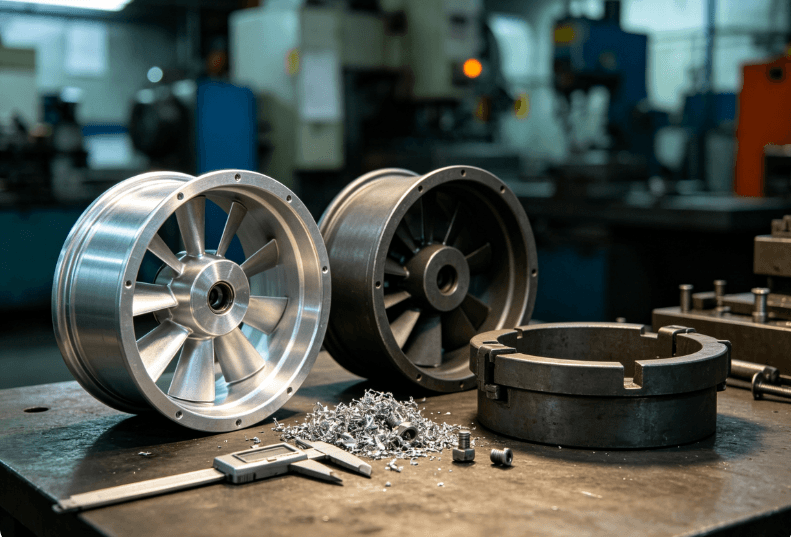
Common hub structural forms include cast hubs, machined solid hubs, welded flanged hubs, and shrunk-fit or split hubs for ease of assembly. Cast hubs are economical for complex geometries; machined solid hubs are used where tighter tolerances or superior fatigue life are required. Split or clamped hubs allow blade removal without moving the motor or shaft. These general forms are standard engineering practice; specific manufacturing choices depend on load, shaft diameter, accessibility and maintenance strategy.
Common materials and supplier listings
Suppliers typically list hubs under product families identified by material or style. For example, COLORFAN’s product pages include listings for “Alloy hub for axial fan” in multiple size codes (10H, 8W, 8H, 6Z, 6W, 6H, 3W) and related hub-with-shaft entries. The supplier also categorizes hubs alongside fan blades and other components on its product pages [supplier]. These listings establish available product families but do not substitute for material certificates or detailed drawings from the manufacturer.
Material and construction comparison
| Material / Type | Typical manufacture | Common benefits | Limitations / notes | Supplier examples |
|---|---|---|---|---|
| Aluminum alloy hub | Cast or machined | Lightweight; corrosion resistance depending on alloy | Lower fatigue strength vs some steels; surface protection may be needed | “Alloy hub for axial fan 8H” (product listing) [supplier] |
| Steel/alloy-steel hub | Forged or machined | Higher strength and fatigue resistance | Heavier; corrosion protection typically required | Product family examples listed by supplier; confirm exact alloy and treatment [supplier] |
| Split/clamped hub (multi-piece) | Machined halves bolted or clamped | Simplifies installation and replacement | Joint stiffness and sealing need verification | Check supplier catalogue for split-hub models [supplier] |
Sizing, balancing and fitment guidance (engineering notes)
When specifying a hub, check shaft bore tolerance, keyway or spline requirements, axial location and any taper fits. Dynamic balance grade and geometric concentricity are critical for long service life: imbalance increases bearing loads and vibration. For efficiency and control, consider whether system-level controls such as variable-frequency drives (VFDs) will be used; the U.S. Department of Energy notes VFDs as a common airflow control method and recommends operating close to the fan’s best-efficiency point where practical [2]. Fan laws and corrections for density, speed and head should guide sizing and power estimates; see the DOE Fan System Cheat Sheet for formulas and correction factors [2].
Workplace ventilation and exhaust routing — safety considerations
If hubs are being specified as part of an exhaust or local ventilation system handling hazardous substances, design and installation must follow applicable ventilation and exhaust rules. For example, OSHA requires that local exhaust ventilation elements (including exhaust fans, ducts and hoods) be designed, constructed and maintained to carry contaminants to safe disposal points and avoid exposing workers during airflow paths and discharge [1]. Use that regulatory guidance to determine discharge location, filtration, and maintenance procedures rather than treating the hub itself as a safety device.
Supplier facts, independent guidance, and RFQ confirmation items
Separate the manufacturer/product facts from independent engineering guidance and the information you must confirm in an RFQ:
- Supplier-page facts: COLORFAN lists industrial axial-fan hubs and blade families and specific product entries such as “Alloy hub for axial fan 8H” and similar size codes on its product pages. These listings confirm the supplier offers hub products and related blade/hub families [supplier].
- Independent engineering guidance: Engineering checks (shaft fit, dynamic balance, material selection, operation near BEP, use of VFDs, and ventilation routing) are supported by industry guidance such as the DOE fan-system recommendations and OSHA ventilation rules [2][1].
- RFQ confirmation required: Any specific claims about hub material chemistry, heat treatment, balancing grade, bore/shaft tolerances, finish, mechanical properties, test reports, or compatibility with a specific motor or blade set must be confirmed with the supplier before purchase. See the checklist below.
Supplier / RFQ checklist
Provide or request the following items when requesting a quotation or replacement hub:
- Exact product code or drawing number (from supplier product page)
- Hub material (alloy designation) and certificate of conformity / material test report
- Bore diameter, tolerance class, and keyway/spline details
- Mounting interface details: pilot diameter, pilot length, flange bolt pattern
- Dynamic balancing grade (ISO balance grade or G specification) and residual unbalance
- Surface finish and corrosion protection (coating, anodizing, plating)
- Heat treatment or hardness specification, if required
- Weight and moment of inertia if rotor dynamics are a concern
- Delivery, inspection and test reports: dimensional inspection, NDE if required
FAQ — Frequently asked questions
How do I know which hub material is right for my fan?
Choose based on operating environment (corrosion, temperature), required strength/fatigue life, and weight. Ask suppliers for material certificates and consider protective coatings in corrosive environments.
Can I retrofit a different hub to an existing impeller?
Potentially, but confirm hub bore/shaft interface, blade fitment, and balancing requirements. Retrofit hubs often require re-balancing and verification of clearance and fasteners.
What balance grade should I require for an industrial axial fan hub?
Balance requirements depend on rotor size, speed and bearing type. Specify an ISO balance grade or allowable residual unbalance in the RFQ; the supplier should confirm achievable values.
Are hub dimensions standardized between manufacturers?
There is no universal standard for all hub dimensions. Many manufacturers use their own size codes and pilot dimensions; therefore confirm all critical dimensions against your shaft and blade set.
Where can I find more technical guidance on fan selection and parts?
COLORFAN provides product pages and technical articles on axial fan parts and selection. See COLORFAN’s axial fan parts guide and the supplier product catalog for hub listings: Axial fan parts guide and Alloy hub for axial fan (product page) (contact supplier for detailed drawings).
Conclusion and next steps
Axial fan hubs are simple in concept but require specific dimensional, material and balance data to ensure long service life and safe operation. Use supplier product listings to identify candidate parts, apply fan-system engineering checks (fan laws, BEP, and system controls) during selection, and issue an RFQ that requests the checklist items above. To discuss models and get drawings, contact COLORFAN via the product pages linked above and request the material and test documentation you need before purchase.