

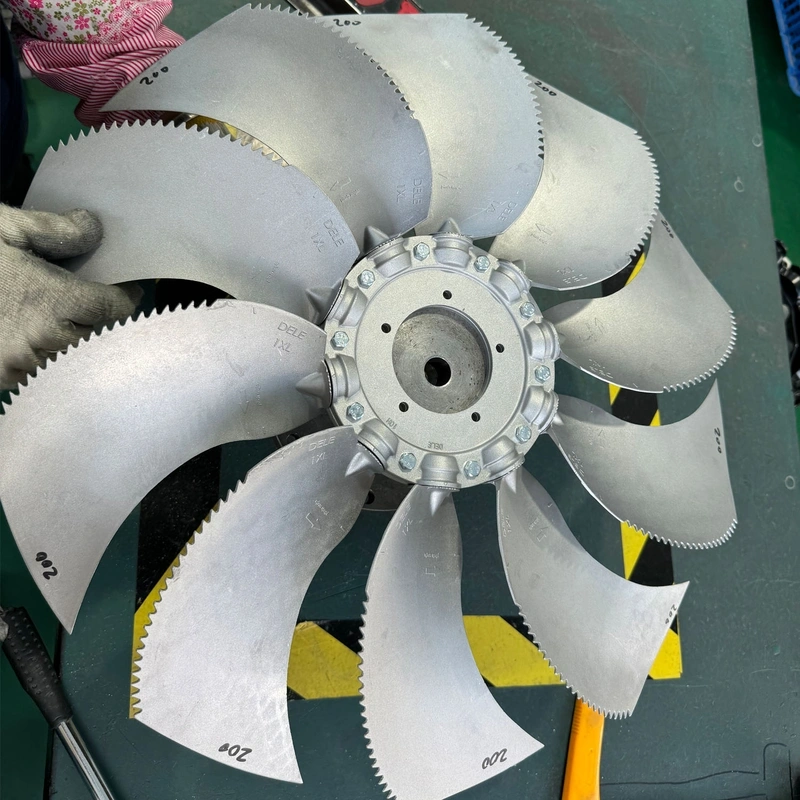
An aluminum axial fan is an axial-flow rotor where blades and often the hub are made from aluminum or aluminum alloy. These fans move air parallel to the fan shaft and are widely used where a combination of light weight, corrosion resistance, and dimensional stability is required. This article explains typical applications for aluminum axial fans, key selection considerations, and when to request technical confirmation from a supplier.
What defines an aluminum axial fan?
An aluminum axial fan is defined by its primary structural components—blades, hub, or both—being fabricated from aluminum or aluminum alloy.
Compared with many plastic fans, aluminum components generally provide higher stiffness for a given weight.
They also offer better dimensional stability at elevated temperatures.However, the exact material grade, manufacturing process, and surface treatment vary by supplier.
COLORFAN lists aluminum axial-fan products and aluminum blades/hubs among its component and fan product pages, including small- and large-size aluminum axial fan items and alloy hubs (see product listings) COLORFAN aluminum axial fan product and material/selection guidance plastic vs aluminum selection guide.
Common applications for aluminum axial fans
Aluminum axial fans are used across industrial and commercial systems where the fan must move a high volumetric flow in-line with the shaft. Typical application categories include:
- General ventilation in factories and workshops where robustness and metal construction are preferred.
- Cooling of electrical cabinets and equipment that require a metal rotor to withstand local ambient temperatures and maintain blade geometry.
- Process-air handling where chemically compatible aluminum alloys or coatings are acceptable for the process stream.
- Replacement or repair where the original design specified aluminum blades or hubs—COLORFAN documents alloy hubs and aluminum blade families suitable for retrofits on compatible assemblies.
Do not assume a single aluminum part or product is suitable for all environments; confirm alloy, surface finish, and suitability for corrosive atmospheres with the supplier.
Technical considerations when selecting an aluminum axial fan
Key selection factors are mechanical configuration, system resistance, drive method, and environmental exposure. The U.S. Department of Energy’s fan guidance highlights the importance of matching fan operating point to the system curve and considering control methods (for example, variable-frequency drives) to manage airflow efficiently [2]. Fan laws link speed, flow and power and should be used when scaling or specifying a fan for a new duty [2].
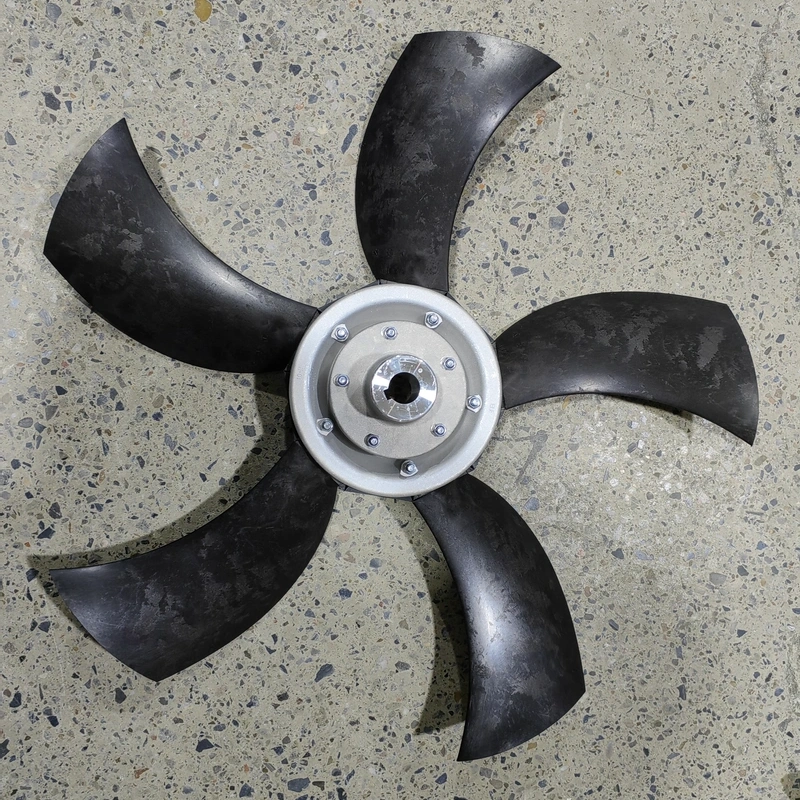
From an engineering perspective, consider these items when aluminum construction is requested:
- Alloy specification and casting/machining tolerances (affects fatigue life and balance).
- Surface treatment or coating for corrosion resistance if the airstream contains moisture or chemicals.
- Blade profile and pitch compatibility with the intended motor and hub design; retrofit blades must match the hub bore and attachment method listed by the supplier.
- System static pressure and required air volume—select a fan whose geometry and drive can meet the system curve without stalling.
- Maintenance access and balance/inspection intervals—metal blades can require different handling than plastic blades.
Ventilation can be used as an engineering control for hazardous substances.
In these applications, local exhaust systems must be properly designed and operated.
Fans, ducts, and hoods must provide sufficient exhaust volume and safe discharge.
Aluminum components do not remove these regulatory requirements.
Use of aluminum components does not change those regulatory responsibilities, but material selection can affect compatibility with the airstream and discharge method [1].
Aluminum vs. Plastic: a practical comparison
| Characteristic | Aluminum axial fans | Plastic axial fans |
|---|---|---|
| Structural stiffness | Generally higher for same geometry (depends on alloy and wall thickness) | Lower modulus but lighter per blade depending on design |
| Temperature resistance | Typically better at elevated temps; depends on alloy | Material-dependent; some nylons soften at higher temperatures |
| Corrosion / chemical resistance | Requires finish/coating selection for corrosive atmospheres | Some plastics are inherently more chemically inert; depends on the chemical |
| Typical uses | Industrial ventilation, equipment cooling, retrofit blade/hub replacements | Electronics cooling, where cost and corrosion resistance are priorities |
Supplier facts, independent guidance, and RFQ confirmations
Supplier-page facts (from COLORFAN)
- COLORFAN product listings include aluminum axial fans and aluminum/alloy hubs and blades; specific product pages show small-size aluminum sickle axial fans and alloy hub products (see supplier product pages).
- COLORFAN publishes selection and blade/hub guides that discuss material choices and blade families.
Independent engineering guidance
- Match fan operating point to system resistance and consider controls such as variable-frequency drives to operate efficiently; see the DOE Fan System Cheat Sheet for fan laws and control recommendations [2].
- When ventilation controls are used for hazardous contaminants or process exhaust, design and operation must meet applicable ventilation regulations for capture, conveyance and safe discharge [1].
RFQ confirmation items (information to request from COLORFAN or to confirm in an RFQ)
- Exact product model or component SKU (blade and hub part numbers) and corresponding datasheets.
- Material/grade of aluminum or alloy and any surface finish or coating specification.
- Blade geometry details (diameter, pitch, chord, number of blades) and hub bore/attachment details.
- Maximum recommended operating temperature and recommended airstream compatibility (corrosives, particulates).
- Balancing grade and recommended field inspection/maintenance intervals.
- Motor/mounting interface details or recommended motor packages for the fan model.
- Proof of any required approvals or test reports (if you need certification for a specific industry, request these documents explicitly): supplier confirmation required.
When to choose an aluminum axial fan
Consider aluminum construction when you require metal rigidity, expect higher ambient or motor temperatures, or when the original design specifies metal blades/hubs. For corrosive environments, request alloy and coating specifics from the supplier before selection. If the application involves hazardous contaminant capture or regulated exhaust, engage a ventilation engineer and use regulatory guidance during system design [1].
Frequently asked questions
Do aluminum axial fans need special maintenance compared with plastic fans?
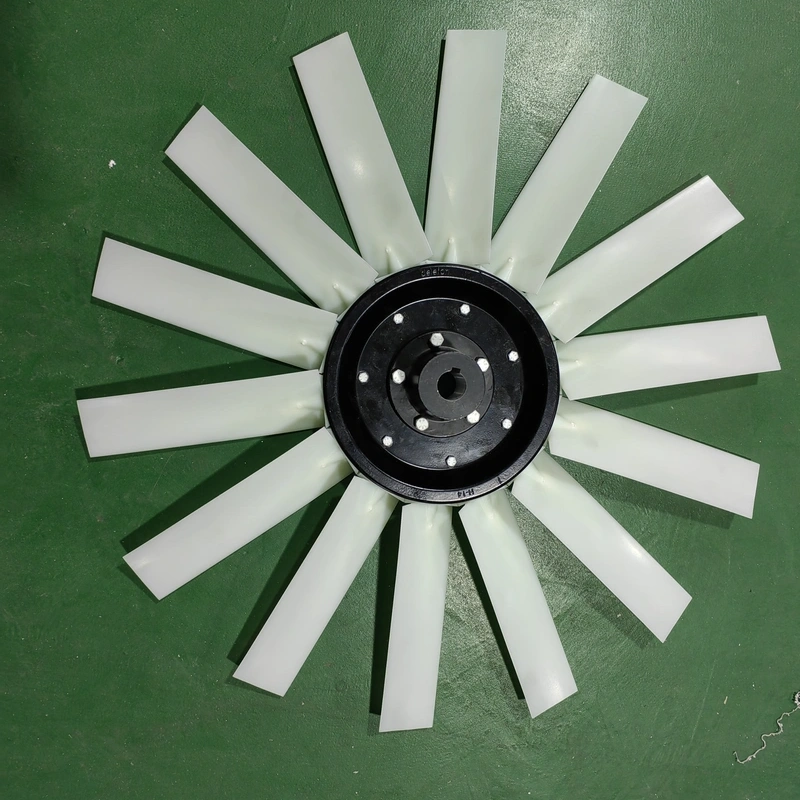
Maintenance differs by material: aluminum blades can be cleaned and inspected for corrosion or fatigue cracks, and may require touch-up of protective coatings. Plastic fans can be inspected for warping or creep. Follow supplier maintenance recommendations and balance checks.
Can I replace a plastic blade with an aluminum blade on the same hub?
Not without confirming compatibility. Blade pitch, mass distribution, hub attachment, and rotor balance must match the hub and motor capability. Request part-fit confirmation and balancing information from the supplier (RFQ confirmation item).
Are aluminum axial fans suitable for explosive atmospheres?
Selection for hazardous locations requires equipment certified for that environment. Material alone (aluminum) is not proof of suitability—use only equipment and accessories certified for the specific zone/class and request certification documentation from the supplier.
How do I estimate energy use for an axial fan application?
Estimate energy use by matching the fan operating point to the system curve and applying the fan laws; consider controls such as variable-frequency drives for variable loads. The DOE Fan System Cheat Sheet provides starting guidance on these relationships [2].
Can COLORFAN supply replacement hubs and blades for an existing axial fan?
COLORFAN lists hub and blade product families on its site; confirm fitment and part numbers with the supplier by providing the original fan dimensions and hub details as part of the RFQ.
Conclusion and next steps
If you are evaluating aluminum axial fans for ventilation, cooling, or retrofit use, start by gathering system static-pressure and flow targets, environmental exposure details, and any regulatory constraints. Use the COLORFAN product pages for component families and then request the RFQ confirmations listed above to verify alloy, dimensions, and mounting compatibility. For detailed fan-systems guidance, consult the DOE fan cheat sheet and applicable ventilation regulations before final selection [2][1].
Ready to proceed? Provide the fan diameter, desired airflow or system pressure, operating environment, and any mounting constraints when you contact the supplier. See COLORFAN product listings and selection guides for available aluminum blade and hub families: COLORFAN products and axial fan parts guide.
References
[1] U.S. Department of Labor – OSHA, 1926.57 Ventilation: https://www.osha.gov/laws-regs/regulations/standardnumber/1926/1926.57
[2] U.S. Department of Energy, Fan System Cheat Sheet: https://betterbuildingssolutioncenter.energy.gov/sites/default/files/attachments/Better%20Plants%20-%20Fan%20System%20Cheat%20Sheet.pdf