

When engineering thermal management systems, choosing the correct cooling mechanism dictates overall equipment longevity. Proper axial fan selection relies entirely on balancing the volumetric flow rate against the internal resistance of your enclosure. Engineers cannot rely solely on the maximum free-air specifications listed on a standard datasheet.
Real-world performance is dictated by the intersection of the fan performance curve and the system impedance curve. Understanding this exact operating point prevents thermal throttling and subsequent component failure. In large-volume production, miscalculating these aerodynamic parameters inevitably leads to costly redesigns and delayed manufacturing schedules.
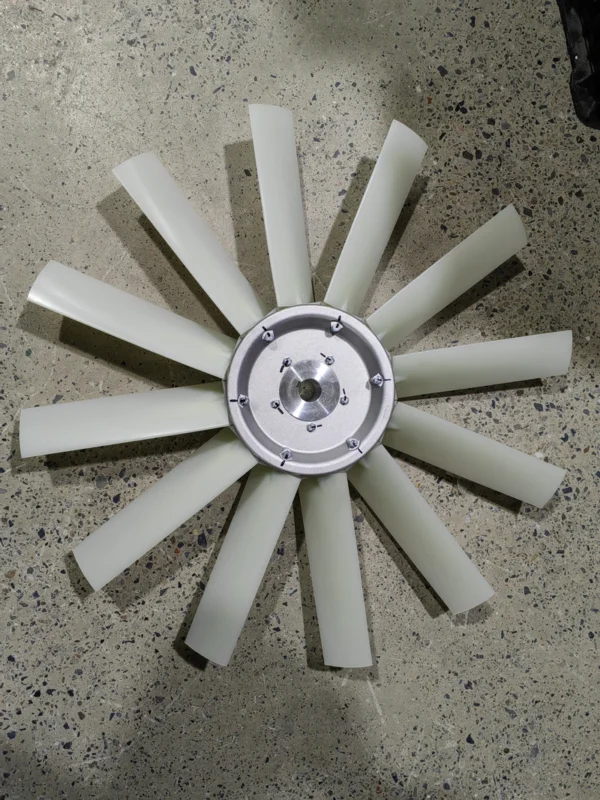
Calculating Heat Dissipation and Airflow Requirements
Before evaluating fan blade designs, engineers must define the thermal boundaries of the specific application. The fundamental goal is to remove internal heat to maintain a stable operating temperature. This requires calculating the necessary volumetric flow rate based on the total power dissipation.
The standard thermal calculation dictates that airflow equals the heat dissipated multiplied by a thermal constant, divided by the allowable temperature rise. Accurate axial fan selection must absolutely account for this baseline thermal load. If the ambient temperature is unusually high, the allowable temperature delta shrinks, demanding a significantly higher flow rate.
Environmental variables also alter these baseline calculations. At higher elevations, lower air density reduces the mass flow of the air being moved. Fans operating at altitude experience a drop in effective static pressure capability, requiring engineers to specify oversized impellers or higher RPM motors to compensate for the thinner air.
Mapping System Impedance to the Operating Point
Every physical enclosure creates airflow resistance, known as static pressure, typically measured in Pascals (Pa) or inches of water (inH2O). As air is forced through ingress filters, densely extruded heat sinks, and tightly packed PCB components, this aerodynamic resistance naturally increases.
An axial fan delivers its maximum airflow only at absolute zero static pressure. Conversely, it delivers zero airflow when it hits its maximum static pressure limit. The actual operating point always sits somewhere between these two extremes. To find it, engineers must plot the system impedance curve against the manufacturer’s performance curve.
- Calculate the exact required heat dissipation in watts.
- Determine the maximum allowable temperature rise within the enclosure.
- Calculate the baseline required airflow using thermal equations.
- Estimate the total static pressure drop across all internal system components.
- Select a fan where the curve intersects the system resistance above the required CFM.
Blade Geometry: Sickle vs. Standard Profiles
The physical shape of the impeller directly influences both static pressure capabilities and overall acoustic output. Industrial cooling systems require specific blade geometries depending on the operational constraints of the final product.
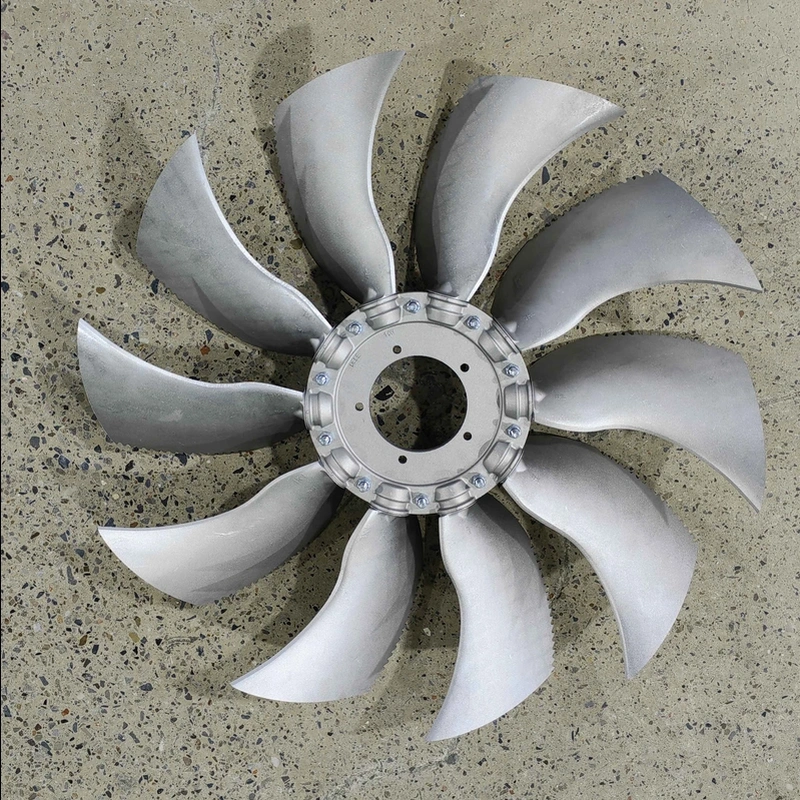
Sickle fans, such as the 7XL series, feature distinct swept-back blades. This aerodynamic design minimizes air turbulence at the extreme blade tips, significantly reducing acoustic noise while maintaining a highly stable pressure curve. They are highly preferred in environments with strict OSHA decibel limits or quiet commercial settings.
Standard straight or slightly curved blades, like the P4Z configurations, prioritize raw airflow generation over acoustic dampening. These profiles are typically deployed where system impedance is relatively low and sheer volumetric turnover is the primary engineering goal.
Material Specifications and Environmental Constraints
The physical operating environment strictly dictates the construction materials of the cooling assembly. Temperature extremes, chemical exposure, and mechanical weight limits all play a defining role in material specification.
- Aluminum Axial Fans: Die-cast aluminum hubs and blades offer superior structural rigidity and high-temperature resistance. They are ideal for heavy industrial machinery, outdoor telecom cabinets, and environments prone to frequent physical impacts.
- Plastic Axial Fans: Utilizing engineering polymers like glass-reinforced PBT, these fans are lightweight and highly cost-effective. They are the established standard for general electronics, commercial HVAC, and medium-duty OEM applications.
- Explosion-Proof Axial Fans: Hazardous locations require specialized construction to prevent any spark generation. These units feature non-sparking materials and enclosed motors compliant with stringent global safety directives.
| Fan Material | Optimal Airflow | Static Pressure Capability | Ideal Application Match |
| Aluminum | High | Medium to High | Heavy industrial, High-temp environments |
| Plastic | Medium | Low to Medium | General OEM cooling, Commercial electronics |
| Explosion-Proof | High | High | Hazardous zones (ATEX/IECEx environments) |
Motor Technologies Driving Performance
The motor drives the impeller and heavily influences the total lifespan of the unit. The choice of motor impacts power consumption, speed control, and integration with automated control systems.
Alternating Current (AC) motors are traditionally used for their simplicity and direct connection to line power. They are highly durable but offer limited speed control capabilities. Many legacy industrial machines still rely on standard AC fans due to their proven reliability in harsh conditions.
Electronically Commutated (EC) motors represent the modern standard for high-efficiency cooling. EC motors provide precise RPM control via PWM signals, allowing the fan to scale its speed dynamically based on real-time thermal sensor data. This capability drastically reduces power consumption and extends internal bearing life.
The RFQ Workflow for Custom Fan Manufacturing
Transitioning a thermal design from the prototype stage into mass manufacturing requires assessing a supplier’s actual production capacity. B2B procurement consultants must rigorously evaluate lead times, minimum order quantities (MOQ), and specialized customization capabilities.
When submitting a Request for Quotation (RFQ), buyers should provide detailed 3D CAD models, specific voltage requirements, and desired IP ratings (such as IP55 for dust resistance). Sampling delays may occur when requesting non-standard blade pitches or custom motor windings.
Quality inspection protocols are equally critical during the RFQ stage. Buyers must verify that the manufacturer performs dynamic balancing on the impellers to prevent premature bearing failure. L10 life expectancy data should be requested to validate the long-term reliability of the proposed fan.
OEM Sourcing and Supplier Integration
Partnering with an established manufacturer streamlines the transition from engineering specification to final assembly. For engineers and OEM project managers seeking scalable solutions, COLORFAN provides comprehensive global manufacturing support.
Focusing heavily on R&D and the production of high-end cooling solutions, their portfolio includes large and medium-size aluminum, plastic, and explosion-proof axial fans. Specific power options, such as their 6W and 9W variants, offer flexibility for varying impedance loads. Their factory capabilities readily support wholesale distribution and highly customized OEM projects worldwide.
Thorough supplier evaluation ensures that the chosen cooling components strictly meet both the technical specifications and the logistical requirements of modern manufacturing pipelines.
Frequently Asked Questions
How does system impedance affect the actual CFM of a cooling unit?
System impedance acts as a physical barrier to smooth airflow. As impedance increases due to thick filters or dense internal components, the fan must overcome higher static pressure. This directly reduces the actual delivered CFM compared to the free-air rating listed on datasheets.
What is the typical lead time for custom OEM cooling fans?
Standard off-the-shelf units often ship within weeks, but custom configurations involving modified blade pitches usually require 4 to 8 weeks. Tooling for entirely new plastic injection molds or aluminum die-casts can extend initial lead times significantly.
Why are explosion-proof fans necessary in specific manufacturing industries?
In environments containing volatile gases or combustible dust (such as chemical processing plants), standard motors can easily ignite the atmosphere. Explosion-proof fans utilize strictly non-sparking materials and sealed motors to comply with safety standards like ATEX.
Can plastic impellers replace aluminum variants in outdoor environments?
While modern engineering plastics are highly durable, outdoor automotive or telecom environments typically require aluminum. Aluminum better withstands extreme temperature fluctuations, long-term UV degradation, and mechanical stress over a demanding 10-to-15-year lifecycle.
What testing standards should industrial fans comply with?
High-quality industrial fans should be tested according to ISO 5801 for aerodynamic performance. Additionally, electrical safety and fire resistance should comply with UL 507, ensuring the unit is safe for continuous commercial operation.
Reference Sources
- AMCA Publication 211-22: Certified Ratings Program Product Rating Manual for Fan Air Performance (Air Movement and Control Association International).
- ISO 5801:2017: Industrial fans — Performance testing using standardized airways.
- IEC 60079-0: Explosive atmospheres – Part 0: Equipment – General requirements.
- UL 507: Standard for Electric Fans (Underwriters Laboratories).
- IPC-9592B: Requirements for Power Conversion Devices for the Computer and Telecommunications Industries.