

Thermal management inside a wind turbine directly impacts power output and system longevity. Generators, gearboxes, and transformers generate massive heat loads requiring continuous heat dissipation. Specifying a reliable wind turbine cooling fan is a critical engineering decision for renewable energy equipment. A failed fan leads to turbine derating or catastrophic thermal shutdown. This guide outlines the technical criteria for evaluating a wind turbine cooling fan supplier. We will explore OEM design capabilities, material selection, and procurement workflows for large-scale manufacturing.
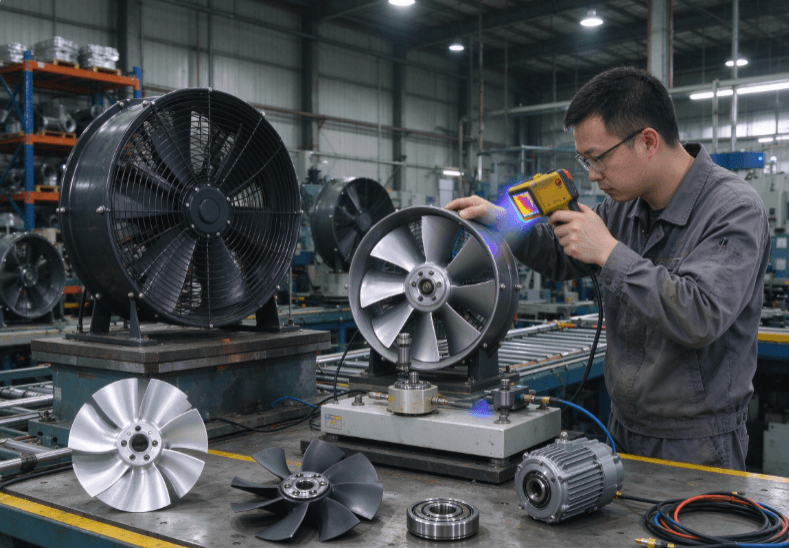
Why Wind Turbine Cooling Requires Specialized Axial Fans
Wind turbines operate in extreme environments characterized by high altitudes, fluctuating temperatures, and heavy vibration. Standard commercial fans cannot survive these operational stresses. Industrial axial fans are engineered specifically to handle the high airflow volumes required for wind power projects[1].
These cooling units must deliver consistent cubic feet per minute (CFM) while resisting stalling under pressure variations. The integration of Electronically Commutated (EC) motors allows for smart speed control[2]. This enables the cooling system to adjust RPM based on real-time thermal sensor data.
For engineers, selecting the right aerodynamic lift profile minimizes power consumption[2]. Blades with steep pitch angles move more air but demand higher motor torque[2]. Balancing impeller diameter and rotational speed ensures maximum efficiency with minimal acoustic vortex noise[2].
Application Scenarios: Nacelle, Generator, and Transformer Cooling
Wind power applications require distinct cooling strategies depending on the thermal zone. Each zone dictates specific fan sizes, airflow rates, and safety certifications.
- Nacelle Ventilation: Large axial fans exhaust ambient heat trapped inside the nacelle casing. These industrial fans often feature diameters ranging from 145mm up to 2200mm[1].
- Generator Cooling: Direct cooling of the primary generator requires high-velocity airflow. Fans deployed here must withstand constant electromagnetic interference and heavy mechanical vibration.
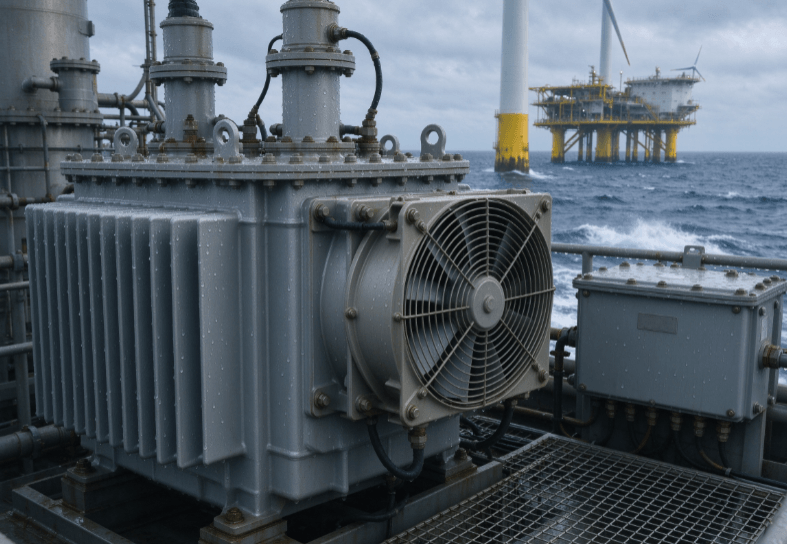
- Transformer Systems: Offshore wind transformers face extreme humidity and corrosive salt spray. Explosion-proof axial fans or units with IP68 ratings are mandatory for safety compliance in these zones[1].
Matching the fan configuration to the exact application scenario prevents premature bearing failure. Offshore environments typically require specialized surface treatments to combat corrosive marine conditions.
Evaluating a Wind Turbine Cooling Fan Supplier
Selecting a competent manufacturing partner reduces supply chain risks and ensures consistent product quality. B2B procurement consultants must audit a supplier’s production capacity and engineering depth.
Look for suppliers offering comprehensive testing, including dynamic balancing and thermal chamber evaluations. The choice of internal components heavily dictates long-term reliability. High-quality ball bearings are strictly preferred over standard sleeve bearings[2]. Ball bearings support continuous operation at varied mounting angles without premature wear[2].
COLORFAN demonstrates strong OEM capabilities by manufacturing high-end axial fans tailored to wind power projects[1]. Their comprehensive product lines include aluminum axial fans and specialized explosion-proof variants[1]. Evaluating a factory’s material science expertise ensures the final product meets exact project tolerances.
AC vs. EC Motor Technologies in Wind Power
Motor selection is a primary cost driver and performance factor in industrial cooling. Legacy systems often rely on standard Alternating Current (AC) motors. AC motors are rugged and cost-effective but lack dynamic control capabilities[2].
Modern wind turbines increasingly utilize Electronically Commutated (EC) motors. EC technology combines the ruggedness of AC with the precise control of DC systems[2]. This results in up to 70% better energy efficiency during operation[2].
EC motors utilize Pulse Width Modulation (PWM) to match cooling output with thermal demand[2]. In a wind turbine, reducing the power consumed by cooling fans increases the net energy supplied to the grid.
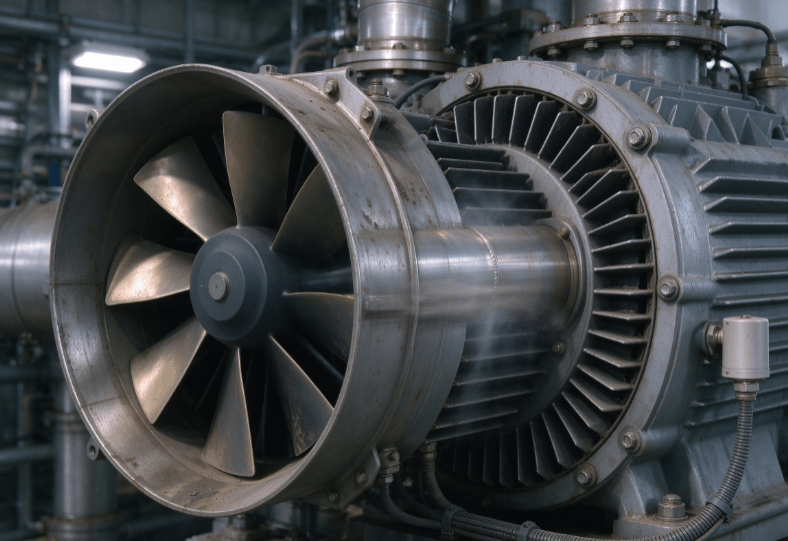
Comparing Fan Blade Materials for Renewable Energy
Material selection drastically alters the performance, weight, and lifespan of an industrial cooling fan. Engineers must evaluate material properties against expected environmental stressors.
Below is a comparison of standard industrial fan blade materials:
| Material Type | Weight Profile | Corrosion Resistance | Fatigue Limit | Best Use Case |
| Cast Aluminum | Moderate | High (with coating) | Excellent | Heavy-duty generator cooling |
| PBT Plastic | Very Light | Excellent | Moderate | Compact electronic heat sinks |
| Sickle Plastic | Light | Excellent | Good | Low-noise nacelle ventilation |
Aluminum blades offer superior durability under constant high-speed rotation[2]. Engineered plastics reduce the overall unit weight, placing less strain on the motor shaft[2]. The specific system impedance will dictate the optimal blade material for any given project.
Quality Inspection and Compliance Testing
Wind turbine components must operate reliably for decades without frequent maintenance. Leading manufacturers implement strict quality inspection routines before shipping any batch.
Every fan should undergo High-Potential (Hipot) testing to verify electrical insulation integrity. Dynamic balancing is another critical step, ensuring the impeller rotates without inducing dangerous vibrations. Unbalanced fans will destroy their bearings rapidly under continuous operation.
Reputable OEM suppliers also adhere strictly to international manufacturing tolerances. Validating compliance with ISO 13348 guarantees the fan performs exactly as specified on the technical datasheet[2].
OEM Solutions and RFQ Workflow for Custom Projects
Customizing a wind turbine cooling fan requires seamless collaboration between the OEM project manager and the manufacturing facility. In large-volume production, establishing a clear procurement workflow prevents costly delays.
A standard RFQ and OEM onboarding workflow includes:
- Specification Submission: Provide the required CFM, static pressure limits, and exact dimensional constraints.
- Component Selection: Choose between AC, DC, or EC motors based on power availability[2].
- Prototyping: The factory produces initial samples for aerodynamic testing and structural validation.
- Compliance Verification: Prototypes undergo testing for IP ratings, vibration resistance, and electrical safety.
- Volume Production: Upon approval, the factory locks the tooling parameters and initiates mass manufacturing.
Sampling delays may occur when custom tooling is required for non-standard impeller diameters. Clear communication regarding Minimum Order Quantities (MOQ) and lead times is essential before initiating an RFQ. Reviewing axial fan technical parameters helps buyers draft precise technical briefs for their suppliers.
FAQ
What is the typical MOQ for custom OEM wind turbine fans?
Minimum Order Quantities depend on the level of required customization. Standard configurations may require an MOQ of 100 units. Custom-tooled impellers often demand an MOQ of 500 units or more to offset factory engineering costs.
How long are the lead times for industrial cooling fan manufacturing?
Standard production runs generally take 4 to 6 weeks. Custom OEM projects requiring new molds or specific explosion-proof certifications can extend lead times to 10 or 12 weeks.
Can supplier engineering teams assist with optimizing fan pitch angles?
Yes. Expert OEM suppliers utilize airflow modeling software to determine the exact blade pitch required for your system’s static pressure resistance.
What certifications should a wind turbine fan supplier hold?
Reliable suppliers must operate under ISO 9001 quality management systems. Individual products should carry CE, UL, or CSA marks, alongside verified IP-rating certifications for dust and moisture ingress protection.
Do suppliers offer specific testing for offshore wind applications?
Absolutely. For marine environments, manufacturers perform rigorous salt spray corrosion testing. They also conduct dynamic vibration testing to ensure fans withstand severe offshore mechanical stress.
Reference Sources
- IEC 61400-1: Wind turbines – Part 1: Design requirements.
- AMCA Publication 211-22: Certified Ratings Program Product Rating Manual for Fan Air Performance.
- ISO 13348: Industrial fans – Tolerances, methods of conversion and technical data presentation.
- IEEE Standard 142-2007: Recommended Practice for Grounding of Industrial and Commercial Power Systems.
- ASHRAE: Guidelines for industrial ventilation and thermal management requirements.
Sourceshelp