

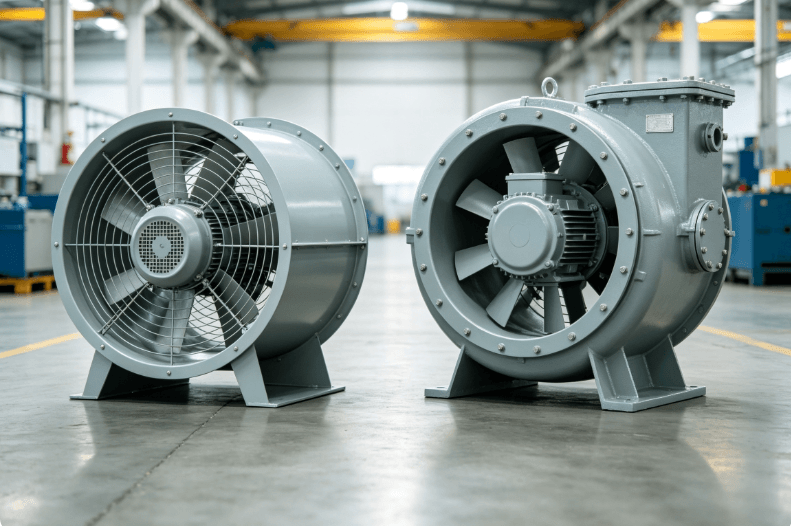
The primary difference between an explosion-proof fan and a standard industrial fan lies in ignition prevention. Standard fans optimize for maximum airflow and thermal management using standard AC or EC motors. Conversely, explosion-proof variants utilize hermetically sealed motors, non-sparking impellers, and grounded housings to prevent atmospheric ignition.
How Does an Explosion-Proof Fan Differ from a Standard Design?
Air movement technology dictates system safety in modern manufacturing environments. Engineers must carefully evaluate atmospheric risks before specifying any ventilation equipment. A standard industrial fan simply moves high volumes of air efficiently.
Explosion-proof units isolate potential ignition sources from combustible dust or gases. The motor enclosure serves as the most critical mechanical modification. It must contain any internal electrical short or spark without igniting the surrounding atmosphere.
The table below outlines the core differences between these two industrial airflow solutions.
| Feature | Standard Industrial Fan | Explosion-Proof Fan |
| Motor Enclosure | Open or TEFC (Totally Enclosed Fan Cooled) | Explosion-Proof (XP) / Flameproof |
| Impeller Material | Steel, PBT plastic, commercial aluminum | Non-ferrous alloys, spark-resistant aluminum |
| Wiring Constraints | Standard flexible industrial wiring | Sealed, rigid metallic conduits |
| Global Certification | CE, RoHS, standard UL | ATEX, IECEx, UL 1203, CSA |
| Primary Cost Driver | Airflow capacity (CFM) and motor efficiency | Specialized housing and compliance testing |
Motor Enclosure Standards and Thermal Management
Explosion-proof motors manage internal heat differently than standard industrial motors. Standard fans rely on Open Drip Proof or Totally Enclosed Fan Cooled designs. These traditional housings allow ambient air to effectively cool the internal stator.
Explosion-proof housings must prevent internal explosions from rupturing the outer shell. The protective enclosure features precision-machined metallic flame paths. These tight tolerances cool escaping gases below the ignition temperature of the surrounding atmosphere.
This heavy-duty construction directly impacts the overall footprint of the equipment. Design engineers must allocate more physical space for explosion-proof models. Robust cast-iron or thick-walled aluminum housings add significant weight to the final assembly.
Material Selection and AMCA Spark Resistant Construction
Material choices heavily differentiate these two distinct fan categories. Standard industrial fans often utilize steel blades or commercial-grade plastics. These standard materials can generate static electricity or produce mechanical sparks upon impact.
Explosion-proof fan manufacturers follow rigorous non-sparking engineering guidelines. The Air Movement and Control Association defines three spark-resistant construction types. Type A requires all airstream components to be constructed from non-ferrous materials.
Aluminum is widely preferred for these critical safety applications. It provides excellent aerodynamic performance without the risk of mechanical sparking. Bearings also require specialized conductive lubricants to prevent static charge buildup.
Corrosion resistance plays a dual role in hazardous industrial environments. Oxidized ferrous metals can trigger a dangerous thermite reaction if struck by aluminum. Therefore, manufacturers strictly control surface coatings and material pairings during production.
Hazardous Industrial Environments Requiring Spark-Free Airflow
Facility managers specify standard fans for general factory ventilation or server cooling. These environments contain highly predictable, non-combustible ambient air. Standard axial designs excel at providing high flow rates in these safe zones.
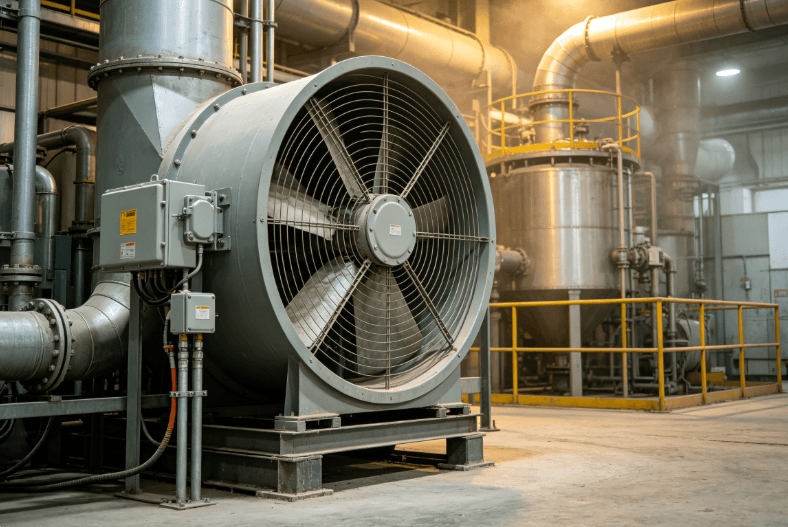
Volatile working environments demand strict explosion-proof equipment certification. Chemical processing plants frequently generate highly flammable vapor pockets. A single mechanical spark can trigger a catastrophic facility failure here.
Agricultural grain silos and battery manufacturing facilities face similar operational risks. Combustible dust clouds require specialized ATEX-certified extraction systems. Explosion-proof fans ensure continuous airflow without compromising atmospheric safety protocols.
Offshore drilling rigs rely entirely on certified spark-resistant ventilation. Saltwater corrosion severely weakens standard commercial fan enclosures over time. Explosion-proof models feature marine-grade protective coatings alongside their internal spark prevention mechanisms.
Wiring and Installation Constraints for OEMs
Electrical connections represent a high-risk failure point in industrial ventilation. Standard fans utilize standard flexible cables and basic terminal boxes. Installers can easily route these wires through standard electrical conduit systems.
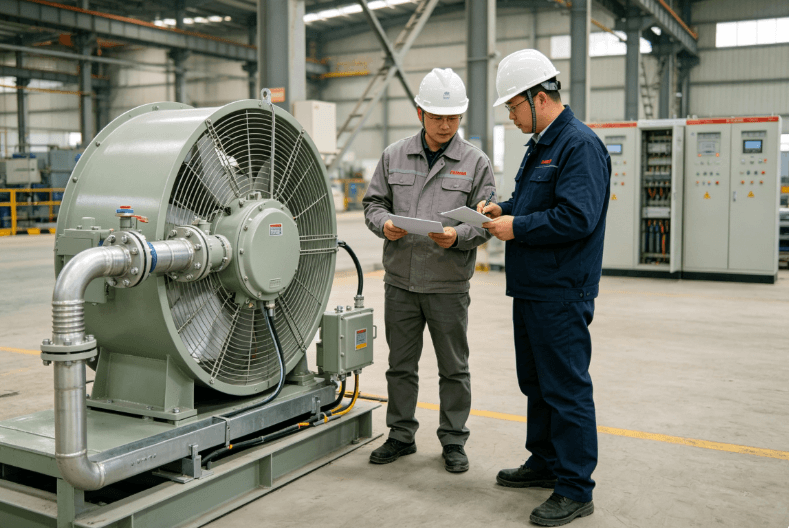
Explosion-proof fans mandate a completely isolated and sealed electrical path. Technicians must use rigid metallic conduits and specialized sealed fittings. This prevents explosive gases from traveling through the wiring back to the control panel.
Terminal boxes on explosion-proof models feature heavy, bolted cover plates. These robust enclosures withstand significant internal pressure spikes without rupturing. OEM integrators must account for increased labor time during the final installation phase.
Comparing Explosion Proof Fan vs Standard Fan for OEM Integration
Selecting the right fan directly impacts project compliance and procurement timelines. Standard ventilation units offer rapid availability and lower upfront component costs. Complex manufacturing projects require a much deeper technical evaluation process.
Engineers must calculate system impedance and static pressure requirements accurately. If you are assessing general cooling needs, review this technical guide on axial fan principles. It explains how motor technology and blade pitch influence standard fan performance.
For hazardous zones, OEM project managers must verify specific explosion ratings. Specialized suppliers offer tailored explosion-proof axial fans for robust industrial integration. These specialized units require longer lead times due to rigorous factory testing protocols.
Procurement teams should verify necessary certifications before issuing an RFQ. Requesting ATEX or UL documentation during supplier evaluation prevents expensive compliance failures. Matching the exact hazardous zone classification ensures long-term operational safety and efficiency.
FAQ
Are explosion-proof fans less efficient than standard fans?
Not necessarily. The aerodynamic efficiency of the aluminum impeller remains comparable to standard designs. Engineers must simply account for slightly higher power consumption due to heavier motor housing designs.
What is the typical cost multiplier for explosion-proof certification?
Explosion-proof models typically cost two to three times more than standard fans. This price increase reflects the use of specialized non-ferrous alloys and mandatory third-party safety testing.
Can I use a standard EC motor in a hazardous environment?
No. Standard EC motors feature exposed electronic components that can easily generate sparks. Hazardous areas require completely sealed motors with specific Class and Division ratings.
How do lead times compare for custom explosion-proof fan orders?
Standard industrial fans often ship from existing inventory within a few days. Custom explosion-proof units require specific machining and extensive compliance testing. Procurement teams should expect longer lead times for certified models.
Reference Sources
- AMCA Standard 99-0401: Classifications for Spark Resistant Construction.
- UL 1203: Explosion-Proof and Dust-Ignition-Proof Electrical Equipment for Use in Hazardous (Classified) Locations.
- ATEX Directive 2014/34/EU: Equipment for Potentially Explosive Atmospheres.
- ISO 13349: Industrial fans — Vocabulary and definitions of categories.