

Selecting the correct fan diameter dictates the success of any thermal management project. An undersized unit leads to catastrophic equipment failure through severe thermal throttling. An oversized unit wastes electrical energy and introduces unnecessary acoustic issues. Engineering the exact dimensions requires balancing aerodynamic principles with mechanical space constraints. Procurement teams and engineers must evaluate volumetric flow requirements before approving any hardware.
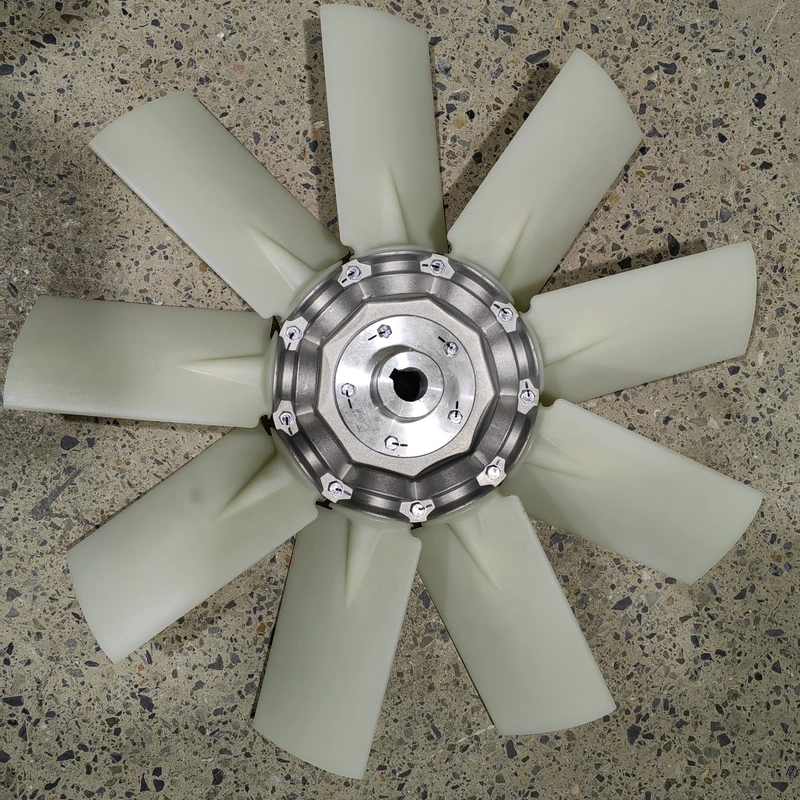
How Axial Fan Size Dictates Airflow and System Efficiency
Airflow capacity directly scales with the physical dimensions of the rotating impeller. A larger diameter moves a significantly higher volume of air per single rotation. This dynamic allows the fan motor to run at lower speeds while achieving target cooling metrics. Lower rotational speeds directly translate to reduced mechanical wear and lower decibel outputs.
Engineers must meticulously match the swept area of the blades to the enclosure’s exhaust ports. Mismatched dimensional tolerances create severe air recirculation zones that destroy static pressure. The physical relationship between the blade span and housing clearance remains a critical efficiency driver. Minimizing the gap between the blade tip and the frame prevents air from slipping backward.
The aerodynamic efficiency of a cooling system is entirely dependent on this sizing geometry. When the axial fan size aligns perfectly with the system impedance, the motor operates at peak efficiency. This prevents unnecessary power draw and extends the Mean Time Between Failures (MTBF) for the entire assembly.
Core Engineering Parameters for Calculating Fan Diameter
To pinpoint the exact axial fan size, engineers rely on standardized thermal dissipation formulas. You must first determine the baseline volumetric flow rate, usually measured in CFM or cubic meters per hour. This calculation requires knowing the total heat load generated by all internal electronic components.
Once the required airflow is established, the physical diameter is calculated alongside system resistance. High-density enclosures create physical impedance that restricts natural air movement. You must evaluate four primary parameters before finalizing any dimensions.
- Volumetric Flow Rate (CFM): Determines the baseline air volume required to maintain target internal temperatures.
- Static Pressure: Measures the physical resistance to airflow caused by filters, heatsinks, and internal wiring.
- Rotational Speed (RPM): Larger fans require drastically less RPM to match the CFM output of smaller units.
- Blade Pitch Angle: Steeper angles push more air but demand significantly higher torque from the driving motor.
The following table illustrates how diameter impacts core performance metrics across different sizes.
| Sizing Factor | Impact on Small Diameters (<100mm) | Impact on Large Diameters (>300mm) |
| RPM Requirement | Extremely high to meet airflow needs | Low, providing high efficiency |
| Acoustic Noise | Often high-pitched and whining | Deeper, lower frequency hum |
| Space Constraints | Fits easily into compact enclosures | Requires dedicated mounting brackets |
| Airflow Volume | Highly restricted by surface area | Massive volumetric displacement |
Sizing Considerations for Industrial vs. Commercial Applications
The operating environment heavily influences the chosen dimensions, blade geometries, and manufacturing materials. Industrial settings routinely deal with airborne particulates, high ambient temperatures, and volatile atmospheric gases. These environmental variables change how engineers approach clearance tolerances and baseline sizing logic.
For heavy-duty ventilation, large aluminum axial fans provide superior structural rigidity. Cast aluminum resists physical deformation at high rotational speeds and handles extreme temperature fluctuations [1]. Medium-size explosion-proof axial fans are absolutely mandatory in chemical or oil processing facilities. They utilize specialized sealed motors to prevent electrical sparks from igniting hazardous airborne mixtures.
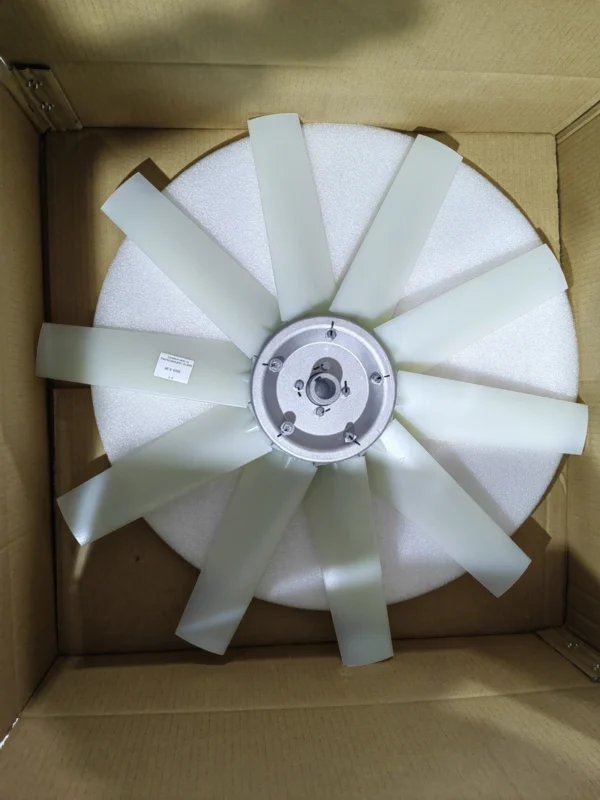
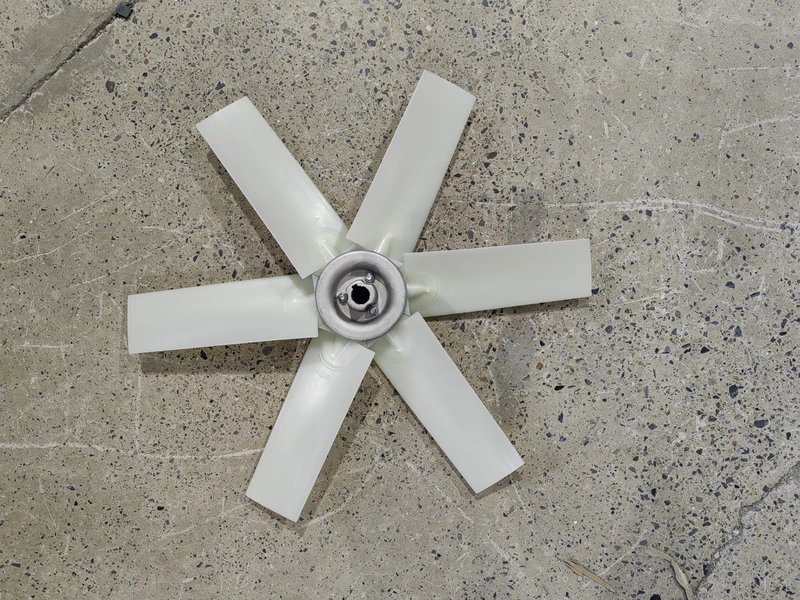
Conversely, lighter commercial applications often rely on advanced plastic axial fans. High-grade thermoplastics offer excellent corrosion resistance and feature a much lower rotational mass. Sickle-shaped blades are frequently deployed in these commercial environments to optimize acoustic signatures. The sweeping blade design reduces trailing edge turbulence while maintaining excellent flow efficiency.
What happens when you choose the wrong axial fan size?
Selecting an inappropriate diameter causes compounding mechanical, acoustic, and thermal failures within an enclosure. Undersizing forces the cooling motor to operate at maximum RPM on a continuous basis. This extreme operational stress drastically shortens the bearing lifespan and inflates baseline energy consumption. The restricted airflow also causes internal component temperatures to spike violently, triggering automated system shutdowns.
Oversizing introduces a completely different set of complex engineering challenges. A fan that is too large for the physical enclosure creates severe turbulent backpressure. Air aggressively bounces off internal walls instead of flowing cleanly through the designated exhaust paths. This creates aerodynamic stall regions where heat becomes trapped in localized pockets.
An oversized unit also consumes unnecessary physical real estate within the chassis layout. This heavily complicates the routing of internal cables and the placement of secondary hardware. Engineers must optimize the axial fan size to sit perfectly in the middle of the performance curve.
Evaluating OEM Manufacturers for Custom Cooling Solutions
When standard off-the-shelf dimensions fail to meet specific thermal profiles, custom manufacturing becomes necessary. Project managers must evaluate a supplier’s ability to modify blade pitch, hub dimensions, and motor integration. A reliable manufacturing partner will provide detailed performance curves mapping CFM against static pressure.
Facilities like COLORFAN specialize in manufacturing specific industrial cooling hardware for global OEM projects [1]. They produce large and medium-size aluminum axial fans, alongside specialized explosion-proof and plastic variants. Procuring directly from an established industrial fan manufacturer ensures access to exact design tolerances.
Customization often requires modifying specific axial fan parts to achieve the target airflow. This includes engineering customized blades, specialized bushings, and optimized hubs designed for precise equipment fitment [1]. Bulk procurement and OEM partnerships require verifying strict ISO certifications and rigorous quality inspection protocols.
FAQ
Q1: How do I calculate the required axial fan size for my enclosure?
Calculate the total heat dissipation (in watts) and the maximum allowable temperature rise. Use the formula CFM = (3.16 x Watts) / ΔT (°F) to find the required airflow volume. Match this CFM output against a manufacturer’s performance curve to select the optimal physical diameter.
Q2: Does fan diameter directly affect the static pressure capabilities?
Yes, but the physical diameter alone does not completely dictate static pressure generation. Blade design, pitch angle, hub geometry, and RPM are equally important operational factors. Axial designs prioritize high flow, though larger hubs can slightly improve pressure characteristics.
Q3: When should I specify aluminum over plastic for axial fans?
Aluminum is strongly preferred for harsh industrial applications facing extreme temperatures or heavy particulate loads. It is also required for explosion-proof certifications in volatile processing environments. Plastic is highly ideal for lightweight, corrosion-resistant, and cost-sensitive commercial cooling projects.
Q4: How does an oversized fan cause system overheating?
An oversized unit pushes more air than the exhaust vents can physically expel. This creates severe backpressure, causing air to recirculate inside the chassis rather than exiting. The trapped hot air forms thermal pockets that rapidly overheat sensitive internal electronics.
Q5: What is the typical lead time for custom OEM axial fans?
Standard stock sizes may ship immediately from wholesale distribution centers. Custom OEM projects involving modified blade pitches, specific bushings, or custom hubs require more time. These highly engineered solutions typically require 4 to 8 weeks for tooling, sampling, and validation.
Reference Sources
- AMCA (Air Movement and Control Association) Publication 201: Fans and Systems.
- ISO 13348:2007 – Industrial fans — Tolerances, methods of conversion and technical data presentation.
- ASHRAE Handbook — HVAC Systems and Equipment (Fans and Air Distribution Chapter).
- IEEE Transactions on Components, Packaging and Manufacturing Technology — Thermal Management Guidelines.