

How does axial fan blade pitch affect performance? The pitch angle directly dictates how much air the impeller displaces per revolution, determining both volumetric airflow and required continuous motor power. A steeper angle increases the airflow rate and static pressure capability but exponentially demands higher electrical torque. Conversely, a shallower pitch conserves motor energy while maintaining aerodynamic stability in high-resistance environments.
Selecting the optimal geometric profile prevents destructive aerodynamic stall. An incorrect angle forces ventilation systems to consume excess electricity while underperforming. This technical guide explores how mechanical engineers optimize pitch adjustments for industrial manufacturing and OEM cooling applications.
The Physics of Airflow and Static Pressure
When an impeller rotates, the blade angle determines how aggressively it engages the surrounding fluid. A steep pitch physically bites into more air volume. This action significantly boosts the cubic feet per minute (CFM) expelled from the system. However, pushing massive air volumes creates severe rotational resistance against the central shaft.
This mechanical resistance directly influences electrical motor selection. Engineers must precisely size the motor to handle the peak continuous amperage. Selecting an excessively aggressive angle forces the motor to overheat rapidly.
To optimize long-term electrical efficiency, technicians evaluate these specific metrics:
- The exact volumetric airflow requirement for the designated thermal load.
- Total downstream ductwork resistance measured in Pascals.
- The maximum safe continuous amperage draw of the selected motor.
- The physical limitations of the fan housing geometry.
Standard affinity laws calculate the exact relationship between fluid velocity and rotational torque. Adjusting the axial fan blade pitch shifts the entire performance curve. Therefore, engineers must plot the newly configured pitch against the specific static pressure curve of the facility.
Material Rigidity Under Aggressive Geometric Profiles
High pitch configurations place immense mechanical stress on the impeller structure. If the raw manufacturing material lacks tensile strength, the blade will warp under load. This physical deflection completely destroys the intended aerodynamic profile.
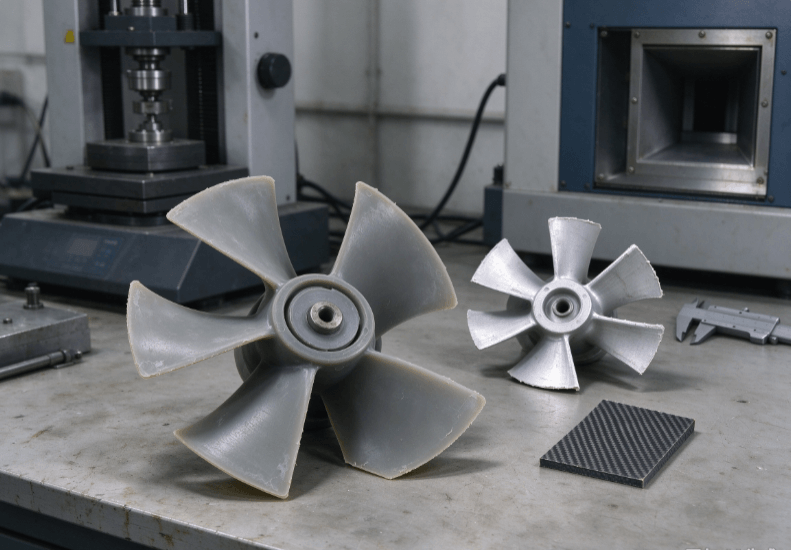
Different industrial environments demand specific material grades to ensure structural integrity. For heavy-duty operations, manufacturers utilize heavy die-cast aluminum alloys. Cast aluminum easily maintains its rigid shape under intense pressure and extreme ambient temperatures.
In medium-duty commercial applications, reinforced thermoplastics are the industry standard. When analyzing core axial fan blade design factors, glass-filled nylon (PA6-GF) offers exceptional structural rigidity. It resists warping even when injection-molded into highly aggressive pitch geometries.
Material Deflection Comparison
| Material Grade | Structural Rigidity | Deflection Risk at High Pitch | Ideal Application |
| PA6-GF Nylon | High | Low in standard environments | Telecom cooling, medium HVAC |
| Standard Plastic | Low | High structural warping risk | Small IT servers, light electronics |
| Cast Aluminum | Very High | Extremely Low | High-temp exhaust, heavy industrial |
| Carbon Steel | Extreme | None | Abrasive exhaust, mining |
Highly corrosive environments require specialized polymer composites. These advanced blends prevent chemical degradation while holding precise pitch tolerances. Procurement specialists source these polymers specifically to reduce ongoing preventative maintenance costs.
Aerodynamic Stall and Acoustic Turbulence
Aerodynamic stall occurs when fluid completely detaches from the suction side of the blade. This catastrophic separation happens when the pitch is too steep for the surrounding static pressure. The detached air violently breaks away, creating severe turbulent eddies.
Stall instantly plummets the overall volumetric airflow capacity of the system. Furthermore, it generates intense low-frequency acoustic vibration. This broadband tonal noise often violates strict workplace safety regulations in commercial facilities.
Continuous structural vibration causes premature bearing failure across the motor assembly. It also induces severe metal fatigue along the stationary mounting hardware. Facility managers must mitigate this turbulence immediately to prevent mechanical collapse.
Engineers resolve stall conditions by physically adjusting the impeller geometry. Decreasing the axial fan blade pitch reattaches the boundary layer fluid to the surface. Utilizing a swept-back sickle profile also delays fluid separation in noise-sensitive cooling environments.
Selecting Impellers for Heavy-Duty Manufacturing
Industrial environments require custom-tuned impellers to manage fluctuating thermal exhaust. In commercial data centers, acoustic emissions represent a critical regulatory failure point. Engineers frequently pair moderate pitch angles with sickle profiles to minimize decibel output.
Petrochemical plants face entirely different fluid dynamic constraints. Heavy industrial exhaust systems rely on straight-edge aluminum profiles to overcome massive resistance. The robust metal prevents the severe structural fatigue associated with high-pressure operations.
Some complex ventilation systems utilize variable pitch hubs to adjust airflow dynamically. These mechanical hubs physically alter the active blade angle during operation. They match the shifting thermal demand of the facility in real-time.
While highly efficient, variable pitch mechanisms require intensive routine maintenance. Dirt and particulate buildup can cause the moving hub components to mechanically lock. Fixed-pitch cast aluminum blades remain the preferred choice for reliable, zero-maintenance industrial cooling.
OEM Procurement: Tooling and RFQ Workflow
Procurement managers must verify that custom impellers match their theoretical airflow curves. A mismatched aerodynamic profile causes expensive production delays during assembly. Factories must utilize strict quality control during injection molding or die-casting runs.
Reputable B2B manufacturers conduct rigorous computational fluid dynamics (CFD) testing. This data proves that the physical pitch matches the theoretical design limits. Validating this performance data upfront guarantees reliable ventilation in the final product.
When initiating an RFQ to source an axial fan blade for large-scale production, define these exact parameters:
- Target volumetric flow rate and total system static pressure.
- Operating temperature ranges and potential chemical exposure limits.
- Desired hub-to-tip ratio and exact pitch angle.
- Non-sparking requirements for explosive ATEX environments.
Custom pitch angles frequently demand bespoke injection molds. OEM buyers must negotiate these specific tooling costs before mass production begins. Clear communication regarding mold ownership prevents costly capital expenditures during future manufacturing scaling.
Dynamic Balancing and ISO Standards
The physical integrity of an impeller means little if the assembly suffers from dynamic imbalance. Even microscopic mass variations cause severe vibration at high rotational speeds. This vibration ruins expensive motor bearings within weeks of deployment.
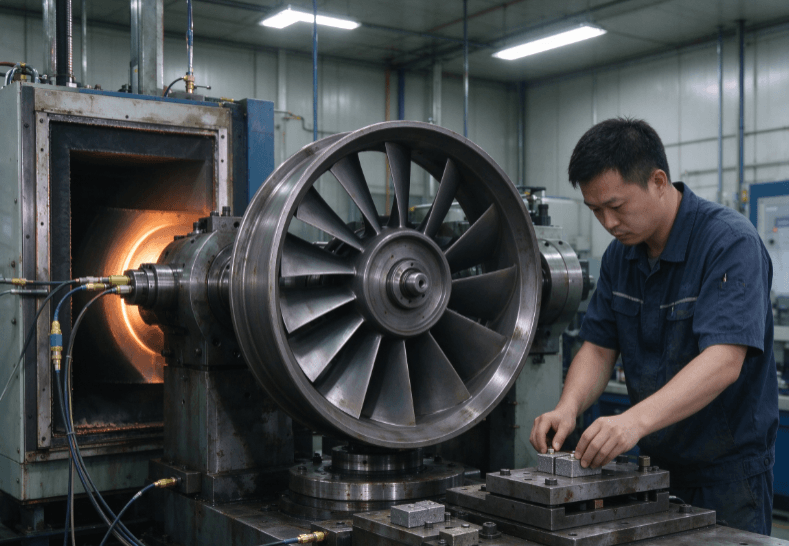
Manufacturers balance impellers using specialized diagnostic machinery. Technicians remove minute amounts of material or add calibrated weights to the central hub. This equalizes the rotational mass perfectly.
Industrial procurement teams typically demand balancing grades adhering to ISO 1940-1 standards. Strict compliance ensures the steep blade angles do not generate destructive rotational resonance. Always request official balancing certificates before approving batch shipments.
Frequently Asked Questions
Can you adjust the pitch on existing axial fans?
This depends strictly on the hub design. Adjustable-pitch hubs allow technicians to manually loosen the blade roots and rotate them to a new angle. However, fixed-pitch, single-piece injection molded blades cannot be adjusted after manufacturing.
How does temperature affect nylon blade pitch?
Standard plastics become highly malleable under extreme heat, causing the pitch angle to flatten out. However, glass-filled nylon (PA6-GF) resists thermal deformation up to high commercial thresholds. For temperatures exceeding 100°C, cast aluminum remains the only structurally stable option.
What is the standard MOQ for custom pitch angle impellers?
Minimum order quantities depend entirely on tooling requirements. If the factory already owns the injection mold for your specific pitch, MOQs are generally low (100-500 units). If a completely custom mold is required, the upfront tooling cost usually dictates a much larger commitment.
How do suppliers verify high-pressure performance?
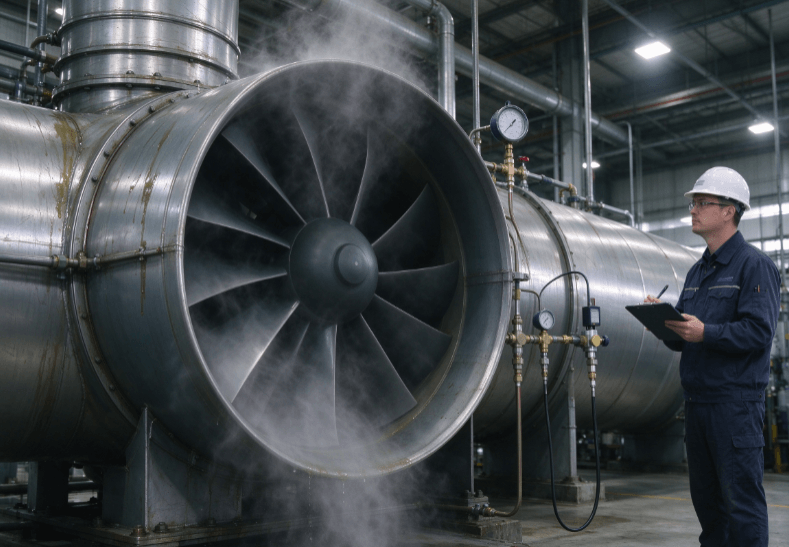
Reputable B2B suppliers utilize specialized wind tunnel testing chambers. These standardized chambers comply precisely with AMCA 211-22 testing protocols. They map the exact static pressure and airflow generated at specific RPMs to validate the design.
Reference Sources
- AMCA Publication 211-22 – Certified Ratings Program Product Rating Manual for Fan Air Performance.
- ISO 5801:2017 – Industrial fans — Performance testing using standardized airways.
- ISO 1940-1:2003 – Mechanical vibration — Balance quality requirements for rotors in a constant (rigid) state.
- ASTM D638-14 – Standard Test Method for Tensile Properties of Plastics.