

An axial fan blade serves as the critical aerodynamic interface within any industrial ventilation system. It moves ambient gases parallel to the central rotational axis. The geometric profile of this component directly governs both volumetric flow rates and static pressure capabilities.
Engineers must meticulously balance structural integrity with aerodynamic efficiency during the system design phase. Selecting the appropriate impeller profile prevents aerodynamic stall conditions and minimizes acoustic turbulence. Precision in this area significantly extends the operational lifespan of the attached motor and bearings.
This guide explores the engineering physics behind these critical rotational components. We will examine how specific materials, geometric contours, and manufacturing tolerances influence overall thermodynamic performance in industrial applications.
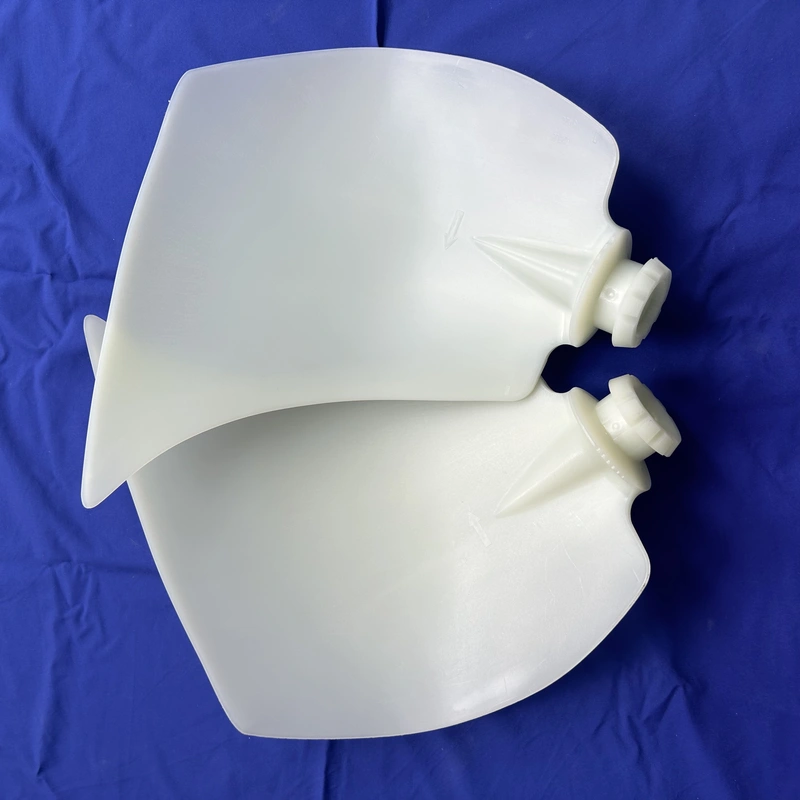
The Aerodynamic Mechanics of the Axial Fan Blade
The fundamental operation of a rotating impeller relies heavily on established airfoil theory. As the rotor assembly spins, the precise curvature of the blade creates a localized pressure differential. This pressure drop forces the air mass aggressively through the cylindrical housing.
Three specific geometric elements control this complex fluid dynamic interaction:
- Chord Length: The straight-line measurement from the leading edge to the trailing edge.
- Camber Line: The asymmetric curvature determining the pressure gradient across the surface.
- Hub-to-Tip Ratio: The proportion between the central rotor hub diameter and the outer sweep diameter.
Lower hub-to-tip ratios generally provide higher volumetric flow rates at lower static pressures. Conversely, a larger central hub accelerates air velocity by restricting the available annular flow area. Engineering teams rely on computational fluid dynamics to optimize these exact structural contours prior to manufacturing.
Structural Profiles: Sickle vs. Straight Trailing Edges
Impeller blades typically feature either a straight or swept-back (sickle) profile. Each geometric configuration solves distinct aerodynamic challenges within commercial and industrial ventilation networks.
Straight profiles offer exceptional structural rigidity under extreme rotational speeds. Manufacturers frequently deploy straight geometries for high-pressure industrial exhaust systems. However, these abrupt edges can generate distinct tonal noise due to sudden trailing edge vortex shedding.
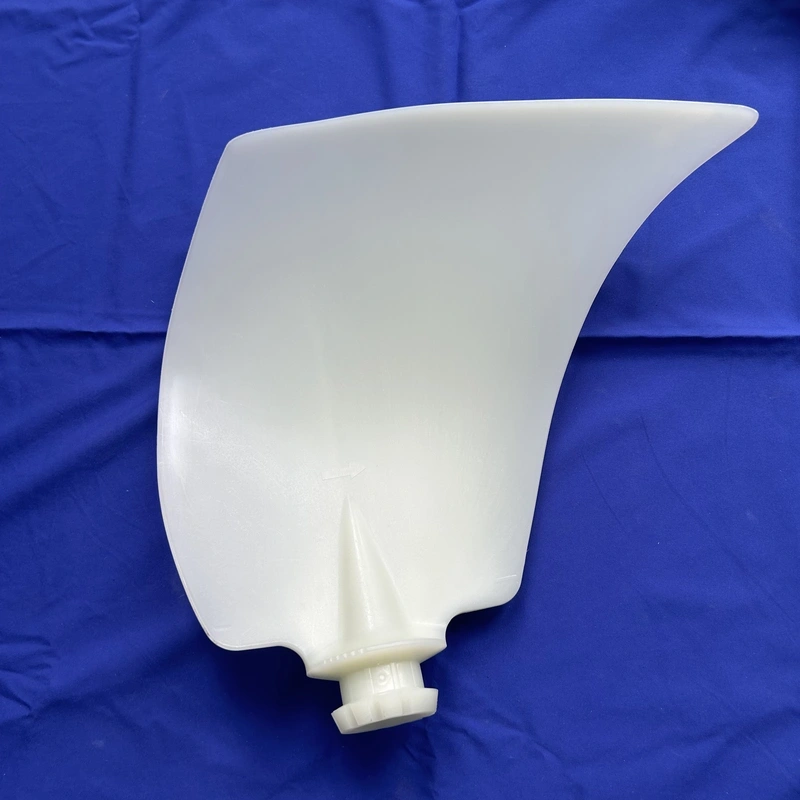
Sickle designs feature a progressive curve along the leading aerodynamic edge. This swept-back geometry gradually cuts through the incoming air stream rather than impacting it uniformly. The gradual engagement delays boundary layer separation and significantly reduces broadband acoustic emissions.
Engineers frequently specify sickle shapes for commercial HVAC units and data center cooling. They utilize these swept profiles wherever local ordinances or workplace safety standards dictate strict ambient decibel limits.
Material Science in Impeller Manufacturing
Material selection heavily influences the rotational mass, deflection threshold, and fatigue resistance of an axial fan blade. The specific operating environment dictates whether engineered polymers or cast metals provide the required operational reliability.
Nylon composites dominate medium-duty industrial applications. Manufacturers often reinforce these thermoplastics with glass fibers (such as PA6-GF) to dramatically improve tensile strength. Injection molding allows production facilities to mass-produce highly complex aerodynamic sweeps with precise dimensional repeatability.
Heavy industrial sectors demand cast aluminum or specific carbon steel alloys. Aluminum profiles resist high-temperature deformation and handle abrasive particulate matter without rapid degradation. Furthermore, non-ferrous metals meet vital non-sparking requirements for hazardous or potentially explosive operating environments.
Material Performance Comparison Matrix
| Material Classification | Tensile Strength | Weight Profile | Ideal Operating Environment |
| Glass-Filled Nylon (PA6-GF) | Moderate to High | Lightweight | Medium HVAC, Telecom Cooling, Electronics |
| Standard Thermoplastics | Low | Very Lightweight | Small Server Racks, IT Infrastructure |
| Cast Aluminum Alloy | Very High | Heavy | High-Temp Exhaust, Mining, Petrochemical |
| Carbon Steel | Extremely High | Very Heavy | Abrasive Material Handling, Heavy Exhaust |
Key Performance Factors Dictating Airflow and Static Pressure
Airflow capacity is never merely a byproduct of motor speed. Specific physical variables dictate how efficiently the impeller moves fluid against downstream system resistance.
Pitch Angle Adjustments
The precise attack angle directly determines the volume of displaced air per single revolution. Steeper angles increase volumetric flow but demand exponentially higher continuous motor torque. Excessive pitch can induce severe aerodynamic stall if the static pressure resistance becomes too high for the profile to overcome.
Tip Clearance Tolerances
This defines the physical gap between the outer impeller edge and the surrounding stationary casing. Tighter clearances prevent high-pressure exhaust air from recirculating back to the low-pressure intake zone. Precision manufacturing minimizes this gap to maximize aerodynamic efficiency and prevent parasitic pressure loss.
Rotational Speed (RPM)
Following standard affinity laws, airflow scales linearly with rotational speed. However, required electrical power scales with the cube of the shaft speed. Engineers must calculate these specific physics to prevent catastrophic motor overload during continuous operation.
Managing Mechanical Vibration and Dynamic Balancing
The structural integrity of an axial fan blade means little if the entire assembly suffers from dynamic imbalance. Even microscopic mass variations across the rotor can cause severe vibration at high rotational speeds.
Manufacturers must subject assembled impellers to rigorous dynamic balancing protocols. Specialized balancing machinery detects minute weight discrepancies across the rotational axis. Technicians correct these imbalances by either removing small amounts of material or adding calibrated weights to the hub assembly.
Proper balancing extends the lifecycle of motor bearings and reduces structural fatigue on the mounting hardware. Industrial applications typically require balancing grades that adhere to strict ISO 1940-1 standards to ensure smooth, continuous operation.
OEM Supplier Evaluation and Industrial Applications
System designers must meticulously match the impeller characteristics to the precise operational environment. A mismatch in structural limits or material specifications can cause rapid, catastrophic mechanical failure.
Corrosive chemical processing plants require specialized polymer blends to prevent rapid material degradation. High-temperature foundry exhausts rely strictly on heavy-duty aluminum alloys to maintain structural integrity under extreme thermal stress. The application always dictates the baseline engineering and procurement requirements.
Specialized component manufacturers structure their production capabilities around these exact application thresholds. For example, technical suppliers like Nanjing Colorfan Technology provide distinct material classifications for highly specialized environments. Their engineering catalogs feature medium-size nylon variants, such as the K6Z or P5Z series, optimized for lightweight cooling applications.
We also produce heavy-duty aluminum sickle profiles explicitly engineered for high-stress industrial ventilation. Procurement teams and engineering consultants often track our latest product updates and manufacturing capabilities via our official company updates. Evaluating our manufacturer’s continuous production improvements ensures long-term operational reliability for large-scale OEM projects.
Frequently Asked Questions
What causes aerodynamic stall in a fan impeller?
Stall occurs when the airflow completely detaches from the aerodynamic surface of the fan blade. This separation typically happens if the pitch angle is too steep for the current static pressure environment. It results in turbulent buffeting, exponentially increased noise, and a severe drop in overall airflow efficiency.
How does glass fiber reinforcement change polymer performance?
Adding glass fibers into nylon bases significantly increases the tensile modulus of the material. This specific reinforcement prevents the plastic blade from warping or deflecting under continuous rotational stress. It allows lightweight engineered plastics to successfully replace much heavier metals in mid-tier industrial applications.
Why is tip clearance critical for airflow efficiency?
A large dimensional gap between the rotating blade tip and the stationary housing creates a direct leak path. High-pressure air escapes backward through this specific clearance into the low-pressure intake zone. Keeping this gap as narrow as manufacturing tolerances safely allow prevents these parasitic recirculation losses.
What is dynamic balancing in fan manufacturing?
Dynamic balancing is the mechanical process of equalizing the mass distribution of a rotating impeller assembly. Technicians utilize specialized diagnostic equipment to locate heavy spots on the rotor. They then add or remove precise amounts of weight to ensure the fan spins smoothly without generating destructive vibrations.
Reference Sources
- ISO 5801:2017 – Industrial fans — Performance testing using standardized airways. International Organization for Standardization.
- AMCA Publication 211-22 – Certified Ratings Program Product Rating Manual for Fan Air Performance. Air Movement and Control Association International.
- ISO 1940-1:2003 – Mechanical vibration — Balance quality requirements for rotors in a constant (rigid) state. International Organization for Standardization.
- ASTM D638-14 – Standard Test Method for Tensile Properties of Plastics. American Society for Testing and Materials.