

Air movement is a cornerstone of industrial thermal management and ventilation. Whether cooling a high-density server rack or exhausting fumes from a manufacturing floor, the choice of airflow technology dictates system efficiency and longevity. Among the various designs available, the axial fan remains the most widely utilized solution for high-volume, low-pressure air movement.
An axial fan is a type of industrial fan that moves air or gas linearly along the axis of its rotation. Unlike centrifugal fans that redirect air at a 90-degree angle, axial fans discharge air in a direction parallel to the shaft on which the blades are mounted. This streamlined movement allows for high flow rates, making them indispensable in environments where cooling or air exchange is required across large surface areas.
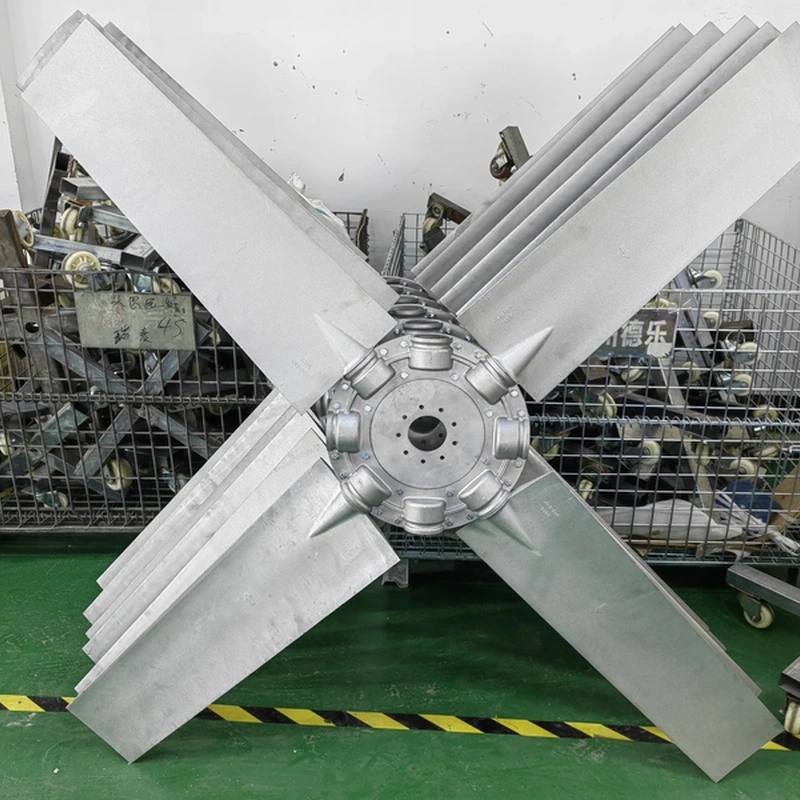
Understanding the Mechanics: How Axial Fans Move Air
The operating principle of an axial fan is rooted in aerodynamic lift, similar to the wing of an airplane. As the motor rotates the impeller, the pressure difference between the front and back surfaces of the blades creates lift. This pressure differential forces air through the fan.
In industrial settings, the efficiency of this process is governed by several technical variables:
- Blade Pitch: The angle of the blades relative to the airflow. A steeper pitch can move more air but requires more torque from the motor.
- Impeller Diameter: Larger diameters generally move higher volumes of air (measured in Cubic Feet per Minute or CFM) at lower rotational speeds.
- Rotational Speed (RPM): While higher RPM increases airflow, it also increases noise levels and power consumption.
For engineers, the goal is to balance these variables to meet the specific “Static Pressure” requirements of a system. Static pressure represents the resistance to airflow, such as filters, grilles, or narrow ductwork. Axial fans are traditionally optimized for systems with low static pressure resistance.
Core Components and Material Science
Industrial-grade axial fans, such as those featured in the Colorfan axial fan series, are engineered to withstand continuous operation. The reliability of these units depends on the synergy of three primary components:
1. The Motor (AC, DC, or EC)
The motor is the heart of the fan.
- AC Motors: Rugged and cost-effective, ideal for simple on/off applications.
- DC Motors: Offer better speed control and are common in electronics cooling.
- EC (Electronically Commutated) Motors: The modern industrial standard. EC motors combine the best of AC and DC, offering up to 70% better energy efficiency and integrated “smart” speed control through PWM (Pulse Width Modulation).
2. The Impeller
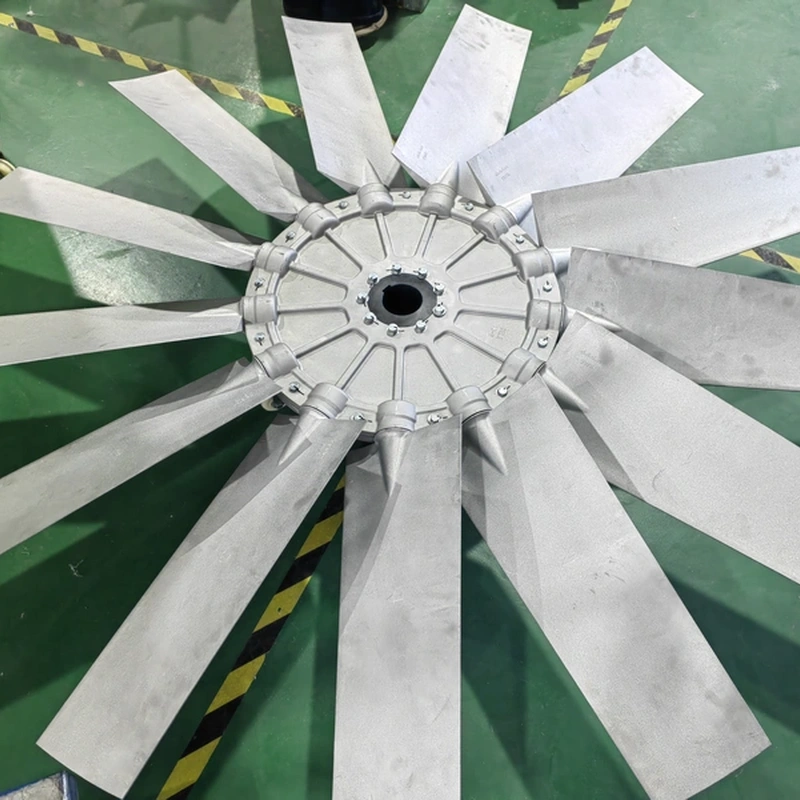
Impellers are often made from high-strength plastics (like PBT) for lightweight electronics cooling or cast aluminum for heavy-duty industrial ventilation. The material choice impacts the fan’s balance, vibration levels, and resistance to environmental factors like humidity or chemical exposure.
3. The Housing and Bearing System
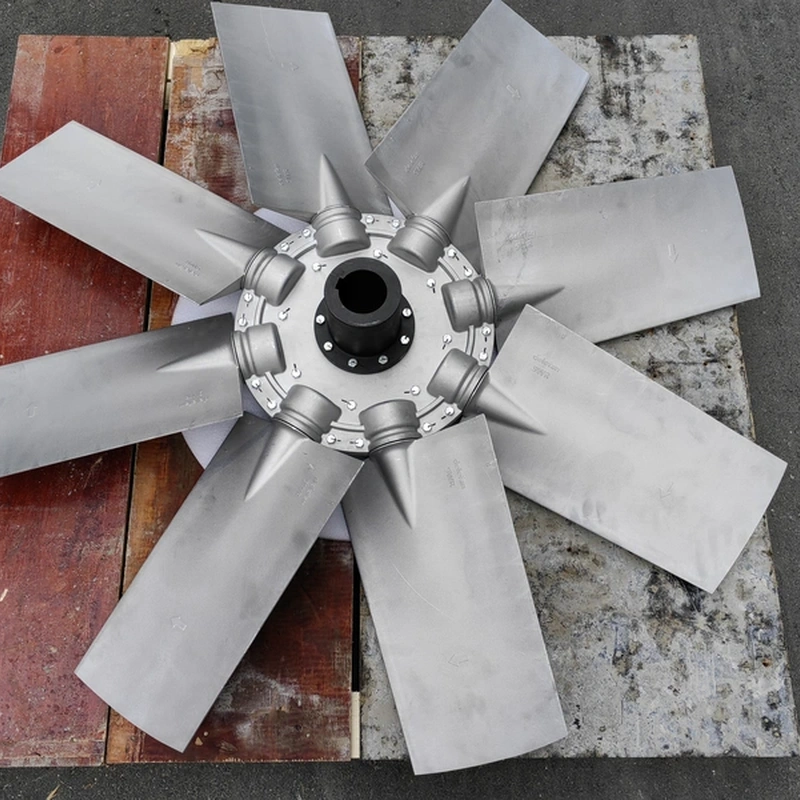
The housing directs airflow and provides mounting stability. Internally, the bearing system determines the fan’s lifespan. Ball bearings are preferred for industrial applications because they can operate at higher temperatures and support any mounting orientation (horizontal, vertical, or angled) compared to sleeve bearings.
Axial vs. Centrifugal Fans: A Technical Comparison
Choosing between an axial and a centrifugal fan is a matter of matching fan performance to system resistance.
| Feature | Axial Fan | Centrifugal (Blower) Fan |
| Airflow Direction | Parallel to the shaft (Linear) | Perpendicular to the inlet (90°) |
| Flow Rate (CFM) | High | Moderate |
| Static Pressure | Low to Moderate | High |
| Best Used For | General ventilation, heat sinks | Vacuum systems, high-density filtration |
| Space Efficiency | Compact, slim profile | Bulkier housing required |
Industrial Applications and Use Cases
The versatility of axial fans allows them to serve diverse sectors ranging from IT infrastructure to heavy manufacturing.
Cooling for Electronics and Power Supplies
In server rooms and telecommunications hubs, heat is the primary enemy of hardware. Small-frame axial fans are integrated into enclosures to provide a constant stream of cool air over PCBs and heat sinks. The high CFM-to-size ratio makes them ideal for dense equipment racks.
Factory and Warehouse Ventilation
Large-scale axial fans, often referred to as “man coolers” or wall-mounted exhaust fans, are used to maintain air quality. They remove stagnant air, smoke, and moisture, ensuring a safe working environment for personnel and preventing the degradation of stored raw materials.
HVAC and Refrigeration
In condenser units and heat exchangers, axial fans pull ambient air across coils to facilitate heat transfer. Their ability to move massive volumes of air at low power makes them the standard for rooftop HVAC units and commercial refrigeration systems.
Critical Selection Criteria for Engineers
When specifying an axial fan for an OEM project or facility upgrade, several factors must be evaluated beyond just the physical dimensions:
- Airflow Requirements (CFM/m³/h): Calculate the total heat load that needs to be dissipated to determine the required volume of air per minute.
- System Impedance: Map the air path. If the air must pass through high-density HEPA filters, a standard axial fan may stall, necessitating a high-pressure variant or an EC-motor upgrade.
- Acoustic Constraints: In office or medical environments, noise (measured in dB) is critical. Selecting a fan with optimized blade geometry can significantly reduce “vortex noise.”
- Environmental Ingress Protection (IP Rating): For outdoor or wash-down environments, fans must be rated (e.g., IP55 or IP68) to prevent failure due to dust or water ingress.
The Shift Toward Efficiency
In modern industrial design, the focus has shifted from “maximum airflow” to “optimized efficiency.” The adoption of EC technology in axial fans allows facilities to reduce their carbon footprint while maintaining precise thermal control. By integrating sensors that adjust fan speed based on real-time temperature data, manufacturers can extend the service life of the fan and the equipment it protects.
FAQ
Q: Can axial fans be used in ductwork?
A: Yes, but only in short, straight duct runs. Because axial fans do not generate high static pressure, long or complex ducting with many bends will cause the fan to underperform significantly.
Q: What causes an axial fan to be noisy?
A: Noise is usually caused by turbulence at the blade tips or vibration from an imbalanced impeller. Choosing fans with aerodynamically optimized blades and high-quality ball bearings can minimize these issues.
Q: What is the average lifespan of an industrial axial fan?
A: A high-quality axial fan with ball bearings typically lasts between 40,000 to 70,000 hours of continuous operation, depending on the ambient temperature and dust levels.
Q: How do I choose between an AC and an EC axial fan?
A: If your application requires constant speed and low initial cost, AC is suitable. However, if you need variable speed control, lower energy consumption, and longer life, EC is the superior long-term investment.
Reference Sources
- AMCA (Air Movement and Control Association): Standards for fan performance testing and aerodynamics.
- ASHRAE (American Society of Heating, Refrigerating and Air-Conditioning Engineers): Guidelines for industrial ventilation and cooling requirements.
- IEEE Xplore: Research on motor efficiency and thermal management in electronics.
- ISO 13348: Industrial fans — Tolerances, methods of conversion, and technical data presentation.